


As I have written extensively about, most consumers of polls do not understand how public opinion surveys are really conducted — or, perhaps more importantly, how they impact our democratic systems of government. This makes errors like the ones we saw last year fodder for journalists who seem to be perpetually waiting to write scathing critiques of pollsters and election forecasters.
In the wake of polling’s performance last November, I have argued that pundits and the public simply need to lower their expectations. That would do a lot of good for helping people to have the correct reaction to the magnitude of errors we keep seeing.
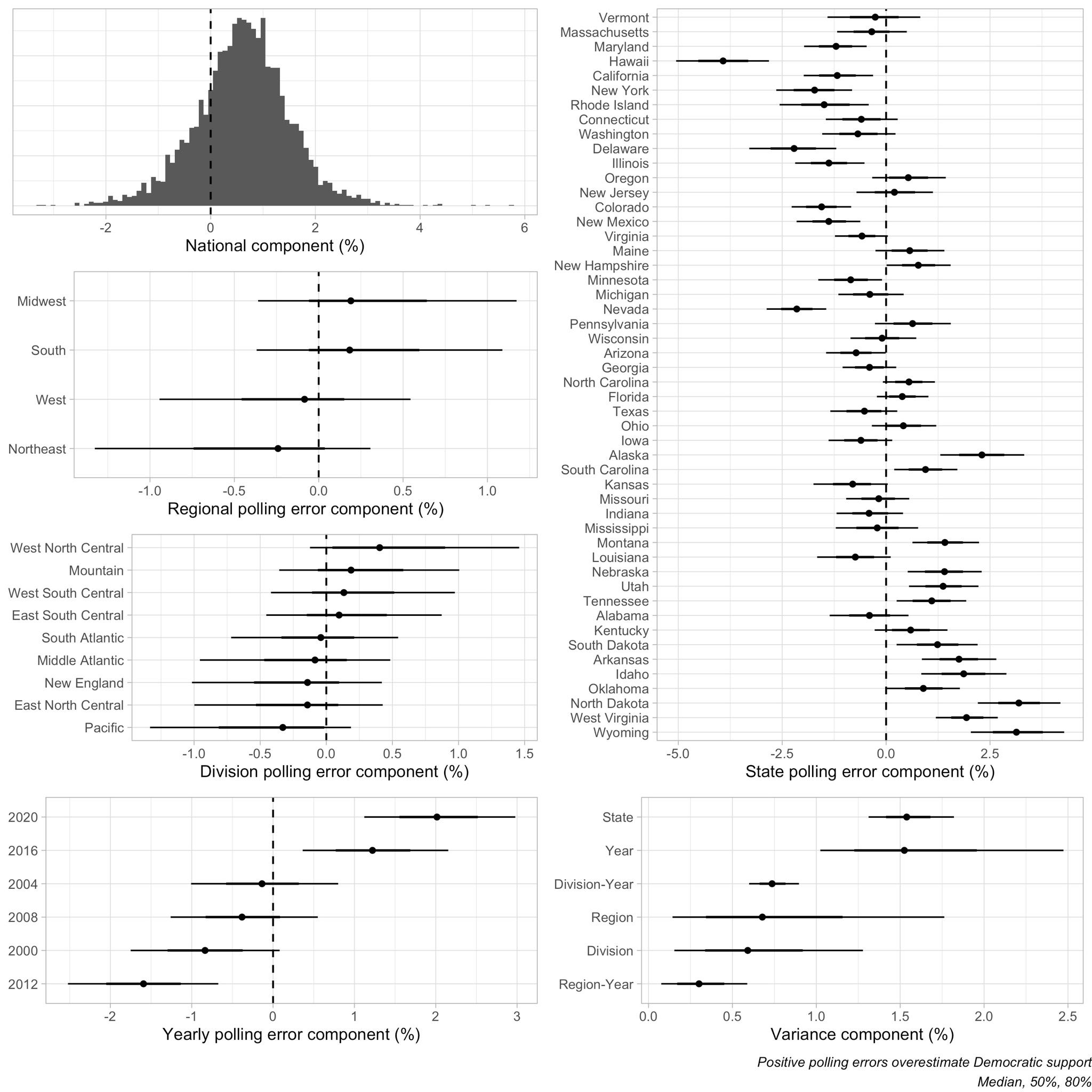
However, the polls last year were wrong — perhaps even more wrong than in 2016 (see this analysis by Merlin Heidemanns). So even though I have argued that we should expect some degree of error, it is still worthwhile to ask what causes any degree of error at all. That’s what this post is about.
This week, the Cook Political Report and University of Chicago …
