


There are many academics who make my job easier by (a) sharing data online or (b) tweeting charts of their findings so I can editorialize without coding stuff up myself. Charles Franklin and Lee Drutman do both. Thanks, Charles and Lee!
I know, I know. Twitter sucks. But I promise I won’t send you there — and people like Franklin, a political scientist and pollster at the Marquette University Law School in Wisconsin, share enough good information to make the sunk time worth the cost. So here’s something he posted this week that I thought we could talk about:
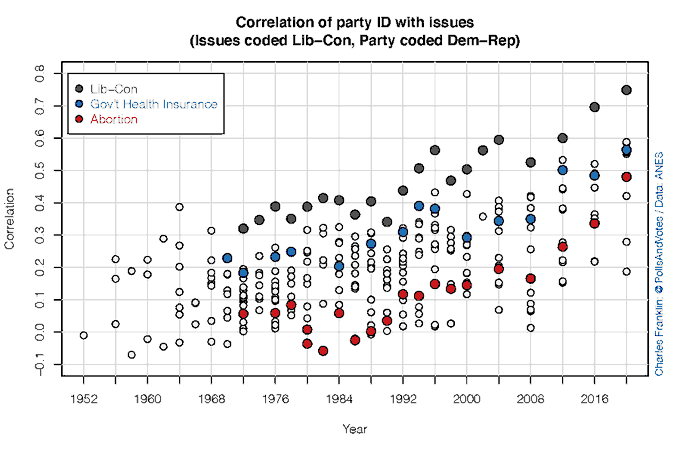
The graph above illustrates the quadriennial election-year correlation between survey-takers’ party identifications and their positions on a range of issues, as well as with their ideological self-placement. Higher marks mean there’s a closer match between someone’s preference on, say, government health insurance and their partisanship, whereas lower marks indicate a looser relationship. The general upwards trends from around 1980 i…
