


Dear reader,
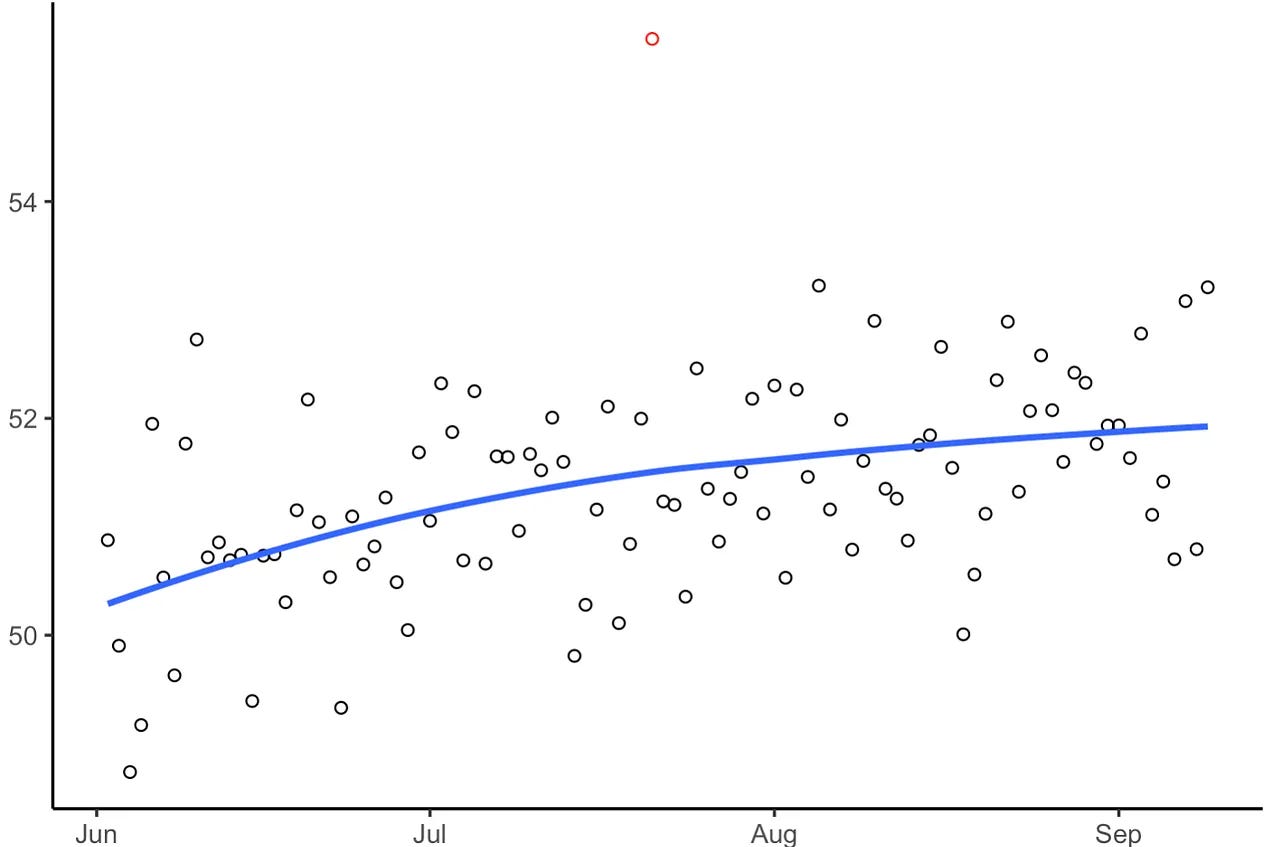
Last weekend, you may have seen a surprising poll result from ABC News (my employer) and The Washington Post. The poll had Trump up 9 points over Biden for a 2024 matchup — quite an outlier when compared to the average poll today (roughly Biden +2, per my estimates for 538).
The episode brought up a lot of good questions (and some harsh criticism) from poll consumers. How can a poll be so far off the average if it’s sampling the same underlying population? How do the crosstabs disagree so much with our priors? Is this a result of pure randomness, or something else?
I took to 538 to answer these questions in a piece that went up Tuesday afternoon. You can find it here. I go over the methodological sources of error in polls and explain why they sometimes get pushed off course, and explain how we address outlier-induced error and pollster-induced bias with 538’s aggregation models. It’s a lot like the old blog posts I used to publish here. I hope you give it a read and enjoy it.
