


Politically, we have more in common than we think.
This is true on some levels and not true on others. For example, it is an empirical fact that Americans have grown further apart in their ideological, partisan, and otherwise political social identities over the last few decades. And here is a chart from friend of the blog Yphtach Lelkes that shows a marked increase in how “coldly'“ Americans rate members of their partisan opponents on a “feeling thermometer” scale ranging from 1-100. Negative partisanship is a hallmark trend of American politics over the last 20 years (and especially the last 10).
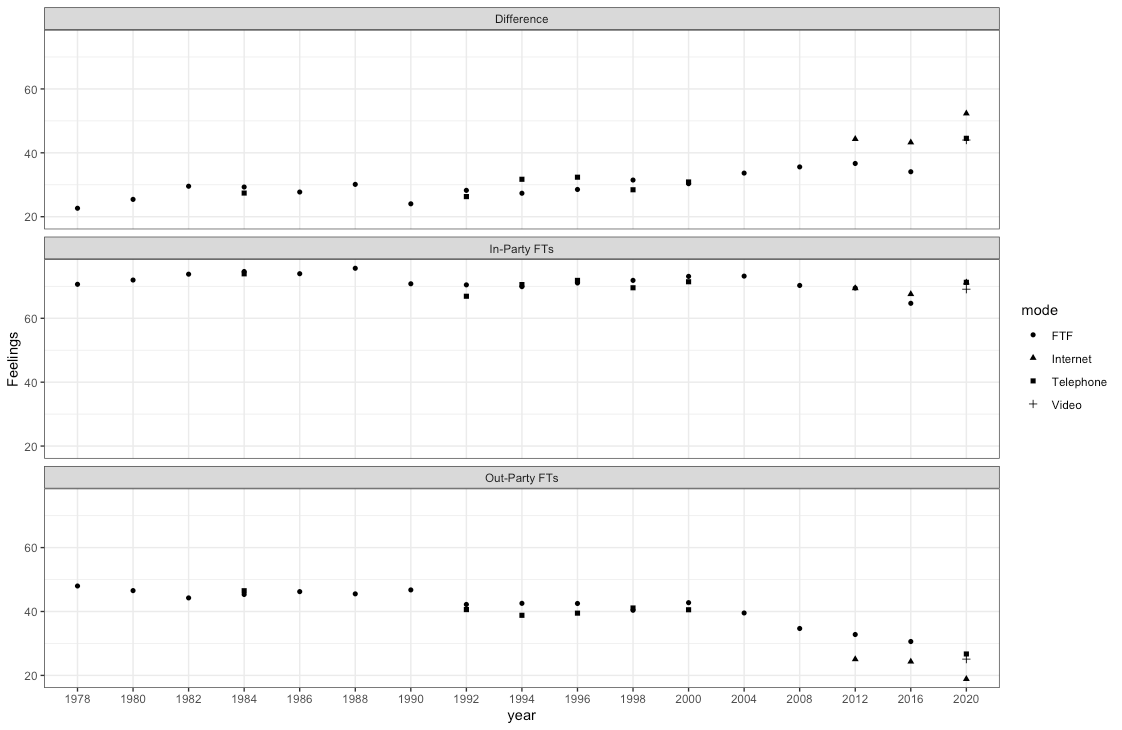
This increasing social distance has all sorts of negative consequences for the health of our democracy. It makes partisan elected officials less likely to cooperate with their opponents and the mass public more tolerant of violence and other bad stuff when it’s happening to members of the other party. It may even lead downstream to an increased likelihood that someone suspends their belief i…
