


Today is Biden’s 99th day in office. Tomorrow, on his 100th, I expect we will see a torrent of news articles comparing his approval rating to past presidents’ numbers.
Most of these articles risk making a big mistake.
Because political polarization has increased so much since the 20th century, we can no longer expect a president to receive a traditionally “high” or “low” rating. This makes historical comparisons meaningless unless they have the proper context.
Take this chart, published in the Washington Post last week, as the first step on our journey. The chart shows both political parties’ rating of each president in every Gallup poll conducted since 1945. The pink bars show the rating of the president for his own party and the orange his rating for people belonging to the opposition. The grey bars are the president’s overall rating.
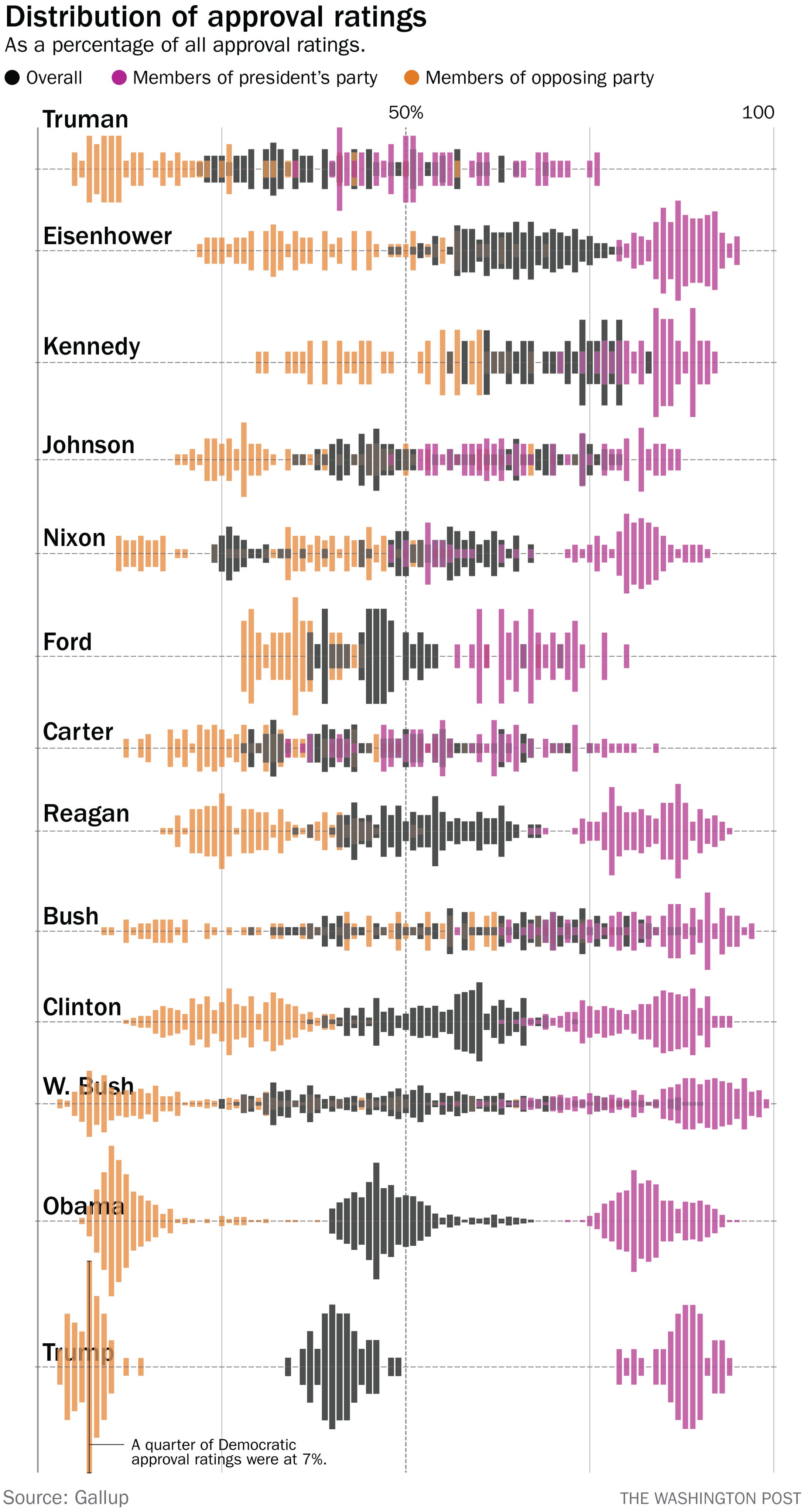
Notice how Gallup’s polls have shown increasingly large divides between the parties on their rating of presidents as time has gone on. In the 1940s, it …
