


This piece is possible because paying subscribers to Strength In Numbers have supported our original, independent polling project that has gathered data every month since May 2025. If you want to get this kind of data-driven reporting in your inbox every week — plus get first access to the full poll and crosstabs each month — a paid subscription is the best way to support it.
Last month, the Republican pollster Patrick Ruffini made the case that polls today are overstating support for Democrats. Across four cycles, he showed, error toward Democrats in Senate polls peaks at about six points in late July and doesn’t fully recede by election day. Polls, he said, always overshoot Democrats in the summer.
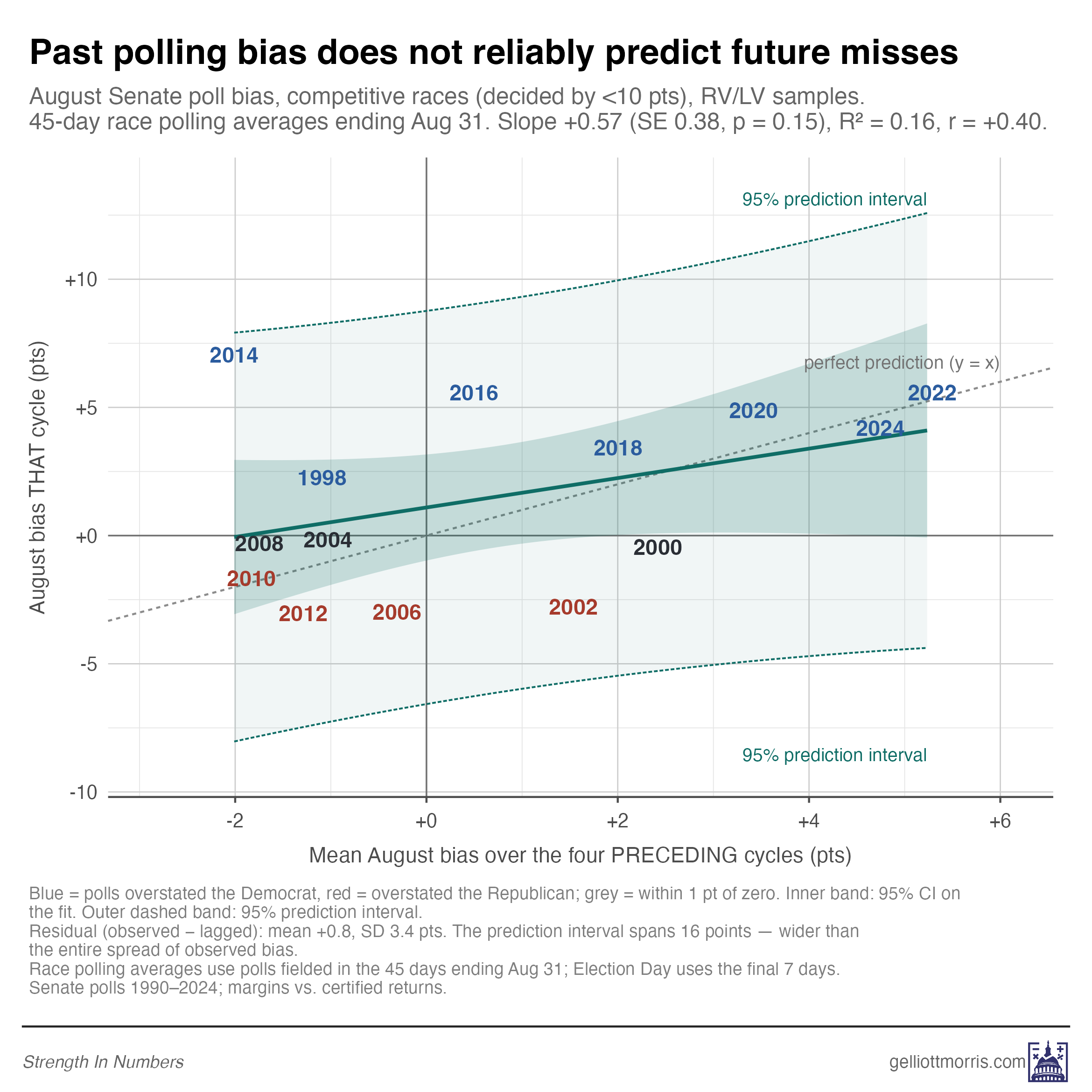
But his analysis was flawed in two ways. First, it was limited to cycles after 2016, when polls have been more systematically biased than they were over the long historical term. And it assumed that bias is predictable ahead of Election Day based on the performance of polls over the last four elections. In fact, in polls going back to 1998, bias in polls varies mostly randomly from cycle to cycle, with some big reversals that make predicting bias a fool’s errand. Over that time period, if you regress a year’s polling bias on the previous four, the relationship is statistically indistinguishable from zero. In other words, the past told you nothing whatsoever about the future.
Still, it’s always a good idea to monitor the polls for signs of non-response bias toward one party. So I also ran an analysis of our individual-level Strength In Numbers/Verasight data to see if the types of people answering our surveys are more left-leaning than the electorate in 2024. They are not. I trained a statistical model to predict 2024 vote choice in public polling data among our poll respondents, and the kinds of people answering our polls are the same kinds, demographically and geographically, who were responding in early 2025.
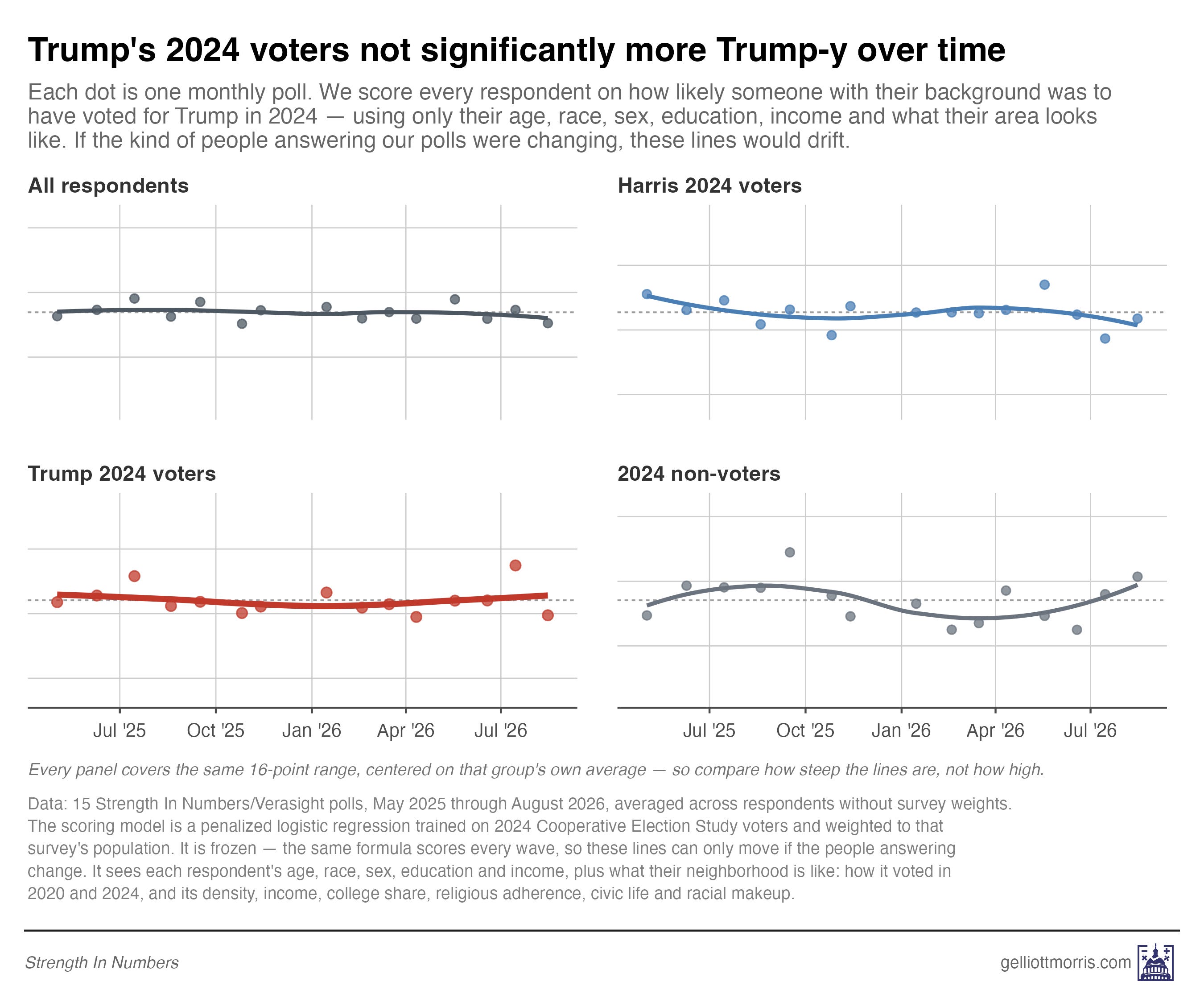
This gives us confidence that polls today are not overestimating support for Republicans, at least in any obvious way we can detect ahead of time. There is still the chance polls are biased in some sort of way we can’t foresee — the unknown unknowns of polling error, so to speak.
But reading these pieces, you may have noticed: Everyone is asking whether or by how much the current polls are overstating support for Democrats. Almost nobody is asking whether they might be understating them. And based on the historical pattern of polling bias being unpredictable from cycle to cycle, that’s a real possibility.
In today’s Deep Dive, I show how polls might be overstating support for Republicans. One adjustment in particular could be costing Democrats up to a point of support in live phone and text polls.
The rest of this piece is paywalled for paying members of Strength In Numbers. Subscribers fund this work and make it possible for me to make a career out of independent journalism. Their support will be key to helping this business grow after the election.
