
One way the shutdown deal might actually help Democrats
A plurality of voters approve of the deal to end the government shutdown. Democrats have an opportunity to claim they saved SNAP & other government programs, which could help repair the party's image
Democrats won the 2025 elections in large part due to a successful message on affordability. The one thing that Abigail Spanberger, Mikie Sherrill, and Zohran Mamdani have in common is that they ran campaigns relentlessly focused on the cost of living and Trump’s direct contribution to higher prices — mainly from tariffs.
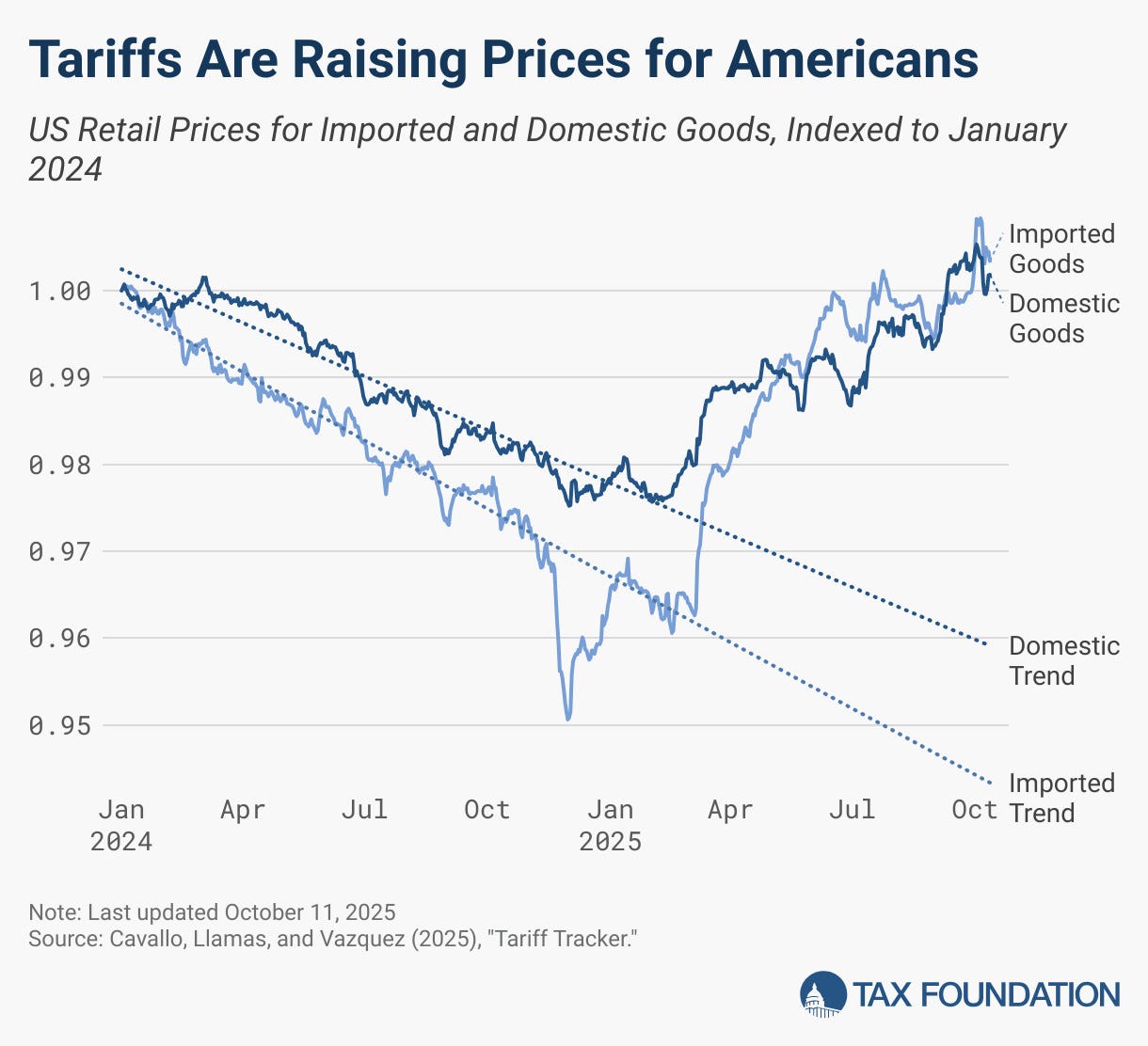
Zooming out, anti-incumbent sentiment also helped these candidates transform “inflation” (really it’s elevated nominal prices, not annual change in prices) into an issue that favors Democrats — a big shift since Nov. 2024. As of Q3 2025, the Democrats have their first lead on the economy in over 5 years — and the largest lead over Republicans in over a decade.
One editorial interpretation of Democrats’ success last week is that the party has succeeded in convincing a majority of voters that it cares about them (I will have updated polling data on this question next week). Probably the biggest weakness for the party in 2024 was that most voters said it was out of touch with them/that Democrats don’t care about the average person.
So what can the party do about this?
Well, running campaigns on affordability evidently helps. Spanberger won Virginia voters who said the economy was their #1 issue (48% of voters) by 30 percentage points, according to the exit poll. That’s a 93-point reversal in the partisan lean of the issue since 2024.
But the other thing voters say they want is for the Democratic Party to actually fight for them. And although the Democrats compromised to end the recent government shutdown, their “caving” paradoxically presents a potential win on the “we care about average people” axis of party competition.
Today’s Chart of the Week: One way the shutdown deal might actually help Democrats.
Ending the shutdown gives Democrats the chance to say they saved SNAP
First, here’s where I admit that my first instinct about Democrats ending the shutdown may have been wrong. Here’s what I posted on social media:
Now, maybe there are some outstanding questions about the optimal caving strategy Democrats could have used: maybe they “should” have waited another week. Or maybe another two.
But after getting the first post-shutdown polling data back, there are some bright spots for Democrats that might actually validate their earlier-than-expected deal.
Here’s what YouGov found. In a poll conducted entirely on Monday, when the deal was initially announced (but not signed into law yet), 37% of adults approved of the deal, and 29% disapproved.
Ignoring undecideds, that’s a 12-point approval lead for the deal (since 37 / (37 + 29) = 0.56, or 56, and 56 - 44 = +12).
The insight from this data is that whoever credibly claims responsibility for “solving the shutdown” may get a nice boost in public opinion. If Democrats make it look like they’re the ones who brought government funding back, then they can claim they saved SNAP benefits, air traffic control, and the jobs of federal workers (many of whom were under threat of being permanently fired).
I would rate this outcome as somewhat likely. Remember that last weekend, the Trump administration appealed a federal court order to distribute food assistance to needy families — seeking to block households from getting SNAP funds. Events like these make it easy for Democrats to paint Trump and the Republicans as anti-food assistance, as well as anti-Obamacare. These are two very popular federal government programs! Democrats should be running ads every day from now until November 2026 about how Trump sued to prevent SNAP checks from going out.
Understand politics with data, not spin.
This newsletter is sponsored by… paying members of Strength In Numbers!
Strength In Numbers is an independent, reader-supported publication for analyzing politics with hard data and statistical analysis, not punditry and partisan spin. My mission is to provide readers with data-driven, no-nonsense coverage of politics. Subscribers get accurate, honest, and personal analysis they can’t get anywhere else in the media.
Get premium independent, fact-based political journalism with a paid membership to Strength In Numbers today, and get other perks like a private Discord community and access to early releases of new data products.
Democrats were (slowly) losing ground in polls of the shutdown
The quick-turnaround YouGov poll from Monday also asked Americans who they blamed most for the shutdown. The results are here:
A plurality of adults blamed Republicans, but the gap between the parties (3 points) was the lowest it has been during the shutdown. The following bar chart combines results from the above poll with other surveys from YouGov conducted since just before the shutdown started.
Note that blame for Democrats rose by 4-5 points since September, while blame for Republicans held about steady (there was a big jump in GOP blame mid-October that seems to have been noise).
So if you’re a Democratic member of the Senate, and you’re looking at the trend line here plus combining it with news of increasing flight delays and the possibility of a protracted Supreme Court fight over SNAP benefits, maybe you decide to take the W on public opinion and push the discussion of Obamacare subsidies to after the holidays.
Since the Senate compromise only funds the government until January 30, if Democrats don’t get their vote on the Affordable Care Act premiums by then, they can always force another shutdown.
In other words, what did the Democrats really give up here? Some will say the party suffered a defeat in principle, since it caved to “work with Trump” on a funding extension. Others have said the Democrats didn’t even get what they started the shutdown for in the first place — so what was it all for? Finally, one criticism I have seen — rightly, in my opinion — is that that a promise of a vote on ACA subsidies is not an actual vote, so isn’t a true victory.
These are valid criticisms, but you have to weigh them against the tradeoffs. Look at the shutdown from the perspective of the average American voter. They see lawmakers in Washington that aren’t doing their jobs, government employees working without pay, and funding lapses in programs that many of them rely on. Remember about 1 in every 8 Americans gets SNAP and roughly 22 million, or 6% of the population, get expanded ACA subsidies. So these are real, meaningful programs. And Thanksgiving — the busiest day for air travel — is coming up. Would Democrats want to risk being seen as the party that destroyed air travel on Turkey Day? Or over Christmas?
In this context, giving Americans short-term relief while delaying their leverage is not obviously stupid. And that’s a win for the most unpopular man in Washington.
Fighting for benefits is the Democrats’ bread and butter
Last week’s elections showed Democrats succeed when they are seen as fighting on behalf of the general welfare of the average person.
Though recent elections have been bad for the Democrats as they are increasingly seen as the party of wealthy, urban, coastal elites, the party brand has historically been a pro-working-class one. For instance, Democrats have held a large and enduring edge on health care policy, according to Pew, as well as on government spending programs in general, according to our Strength In Numbers/Verasight polling.
The shutdown can reinforce the Democrats’ advantages on these key issues. By originally standing up to Republicans and forcing a shutdown focused on health care and food assistance, Democrats showed they are willing to stand up for programs that benefit Joe the Plumber. They tilted the issue landscape further in their favor.
Then, by landing on a compromise that funds SNAP and reopens the government, Democrats have a credible claim to even more ground here. We will have to wait for more data, but the initial polls suggest they may have succeeded on this front.
When people ask what the Democratic Party stands for, lower costs, food benefits, and airline workers make a good trio. The shutdown may not have been a total success for Democrats, but it may have just staged a big win in repairing the party’s image.


I believe the Rs were never going to agree to extend the subsidies during the shutdown. Period. The ending wan't perfect it turned out more positive than negative for Dems. But now they gotta bare their teeth.
Yes: at least an ad a day on rs denying food aid and health care access to Ms of Americans. This is medieval England when the Benedictine monasteries -- the only infirmaries available -- were forcibly shuttered and people literally left to die in the streets. This is what rs -- in Congress, WH, and Roberts court -- choose and want.