

The high cost of rolling over on immigration
What Matt Yglesias, Hakeem Jeffries, and Keir Starmer got wrong about the politics of immigration

In March 2025, the Trump administration illegally deported Kilmar Abrego Garcia — a resident of Maryland — to a prison camp for accused gang members and terrorists in El Salvador.
The deportation of Abrego Garcia instantly became one of the clearest, most concrete examples of what Trump’s “mass deportations now!” immigration policy would look like in practice. Abrego Garcia was legally protected from removal to El Salvador, had been living in the U.S. without any criminal convictions for over a decade. He had a child with an American citizen. Polls showed that deporting long-term residents like Abrego Garcia was dramatically unpopular with the majority of American voters.
At the time, there were two major reactions to Abrego Garcia’s deportation among both Democratic lawmakers and party elites. One side — embodied by the advocacy for Abrego Garcia by Maryland Senator Chris Van Hollen — was that Democrats should point out the excesses of Trump’s immigration policy and try to turn his best issue against him. The other side — including, notably, House Minority leader Hakeem Jeffries and the political blogger Matthew Yglesias — argued that Democrats shouldn’t be drawing attention to immigration, because they would “raise the salience” of Trump’s “best” issue. Yglesias scolded progressives on Twitter, writing:
people who post about politics on social media should talk about immigration if they want to, but should be mindful of downside to making it more salient.
And Yglesias gave a speech making similar arguments in the summer:
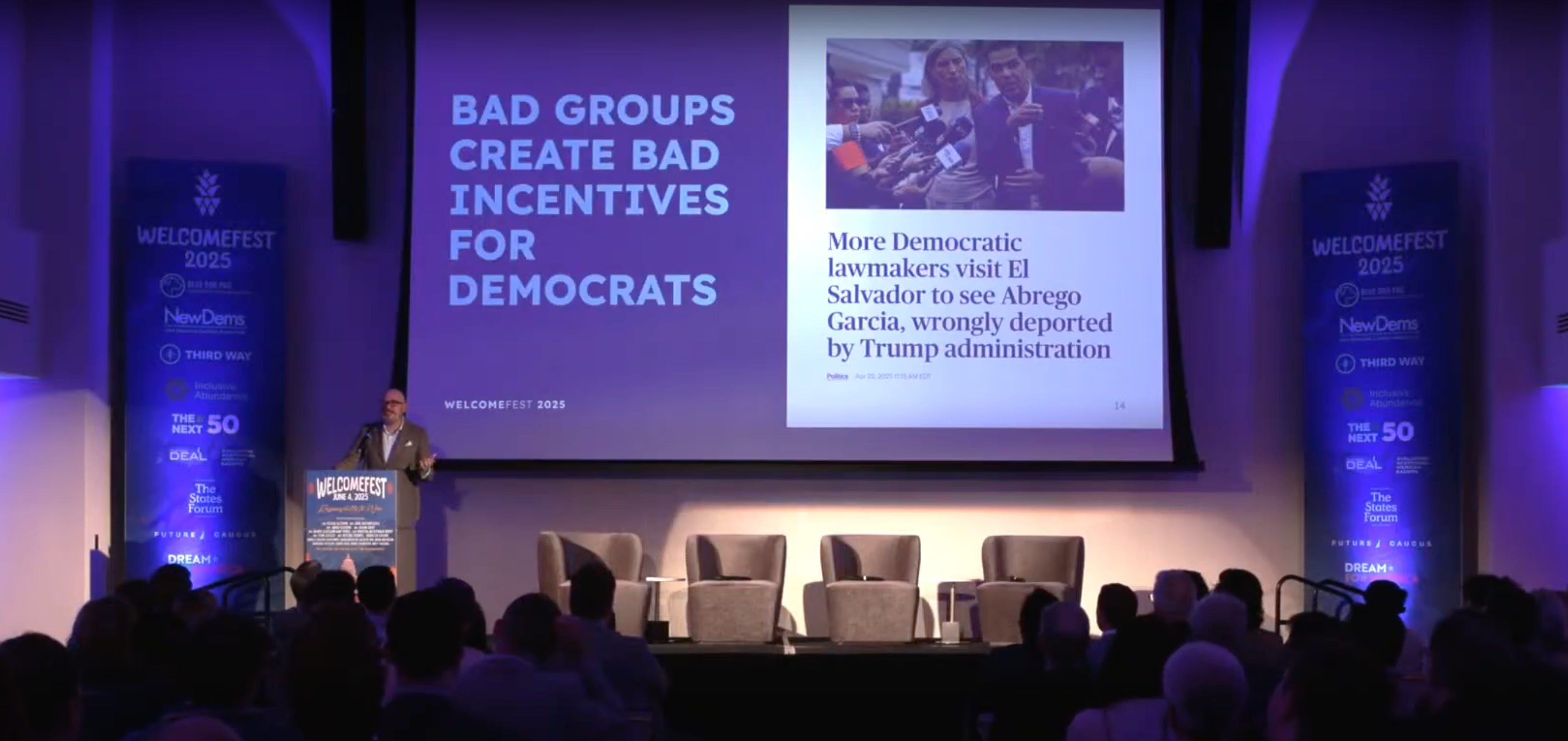
When this was unfolding, I wrote several responses to Yglesias and Jeffries — in part because they were obviously wrong but also because they were misusing my own data to make their argument. I looked at the data and showed that Trump’s immigration agenda was not actually popular, as Yglesias and Jeffries assumed, and that Democrats could fight Trump on immigration and economics at the same time. And I even conducted a bespoke survey experiment here at Strength In Numbers to see how people would react to news about the news once they heard about it.
After some time had passed, I looked at the data again (I like to keep score on what I’m right and wrong about) and found that coverage of Abrego Garcia’s unlawful deportation significantly hurt Trump, as I predicted — and despite the predictions of people like Yglesias and Jeffries:
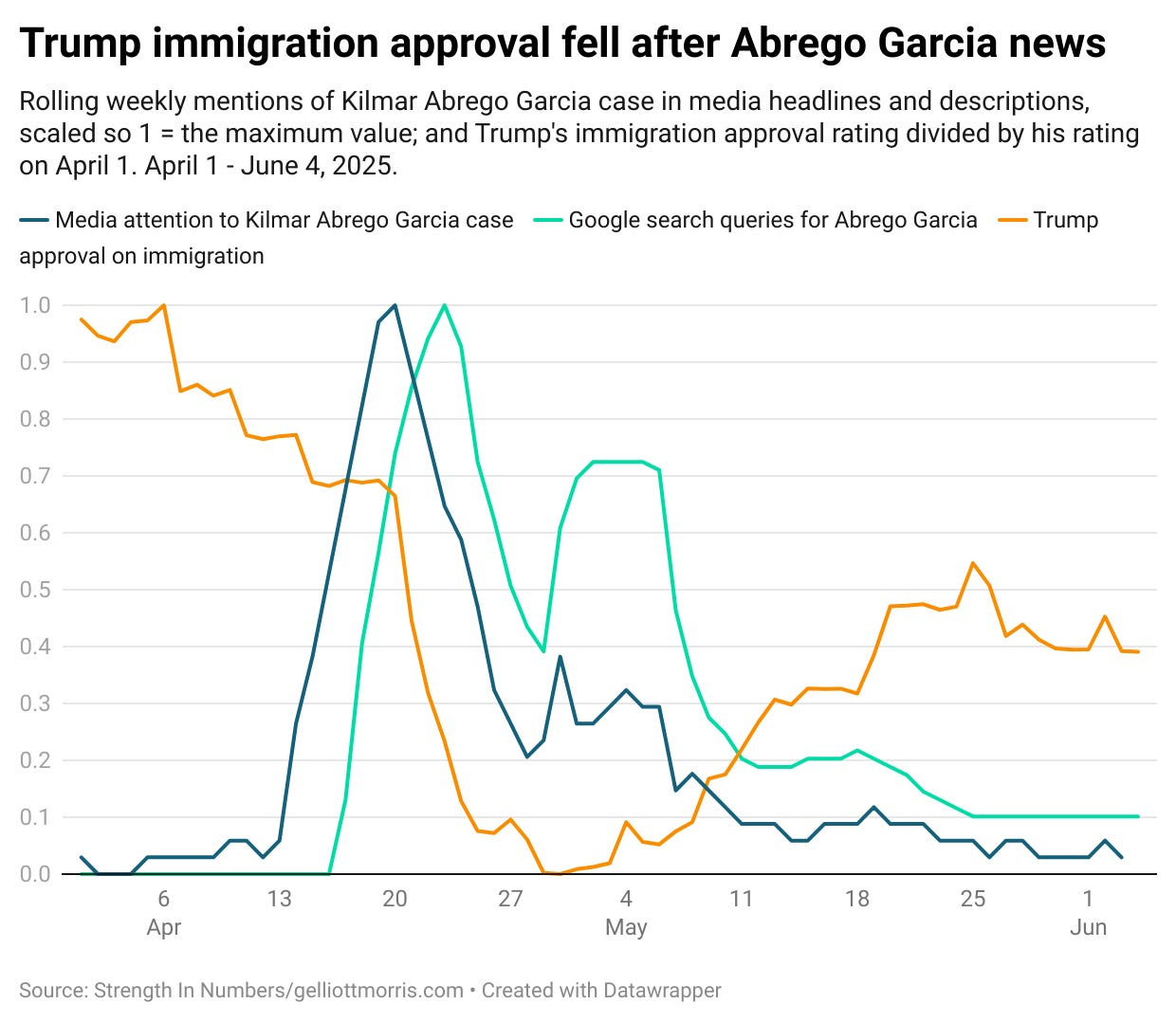
The chart below shows Trump’s approval on immigration and several other issues. When Democrats started calling for Abrego Garcia to be returned in late April, the president’s approval rating on immigration fell off a cliff. Then, when news attention to the subject fell in late May, his approval recovered. It dipped again in mid-June, when the president (again unlawfully) deployed the National Guard to aid with immigration enforcement operations in Los Angeles, and has stayed low since:
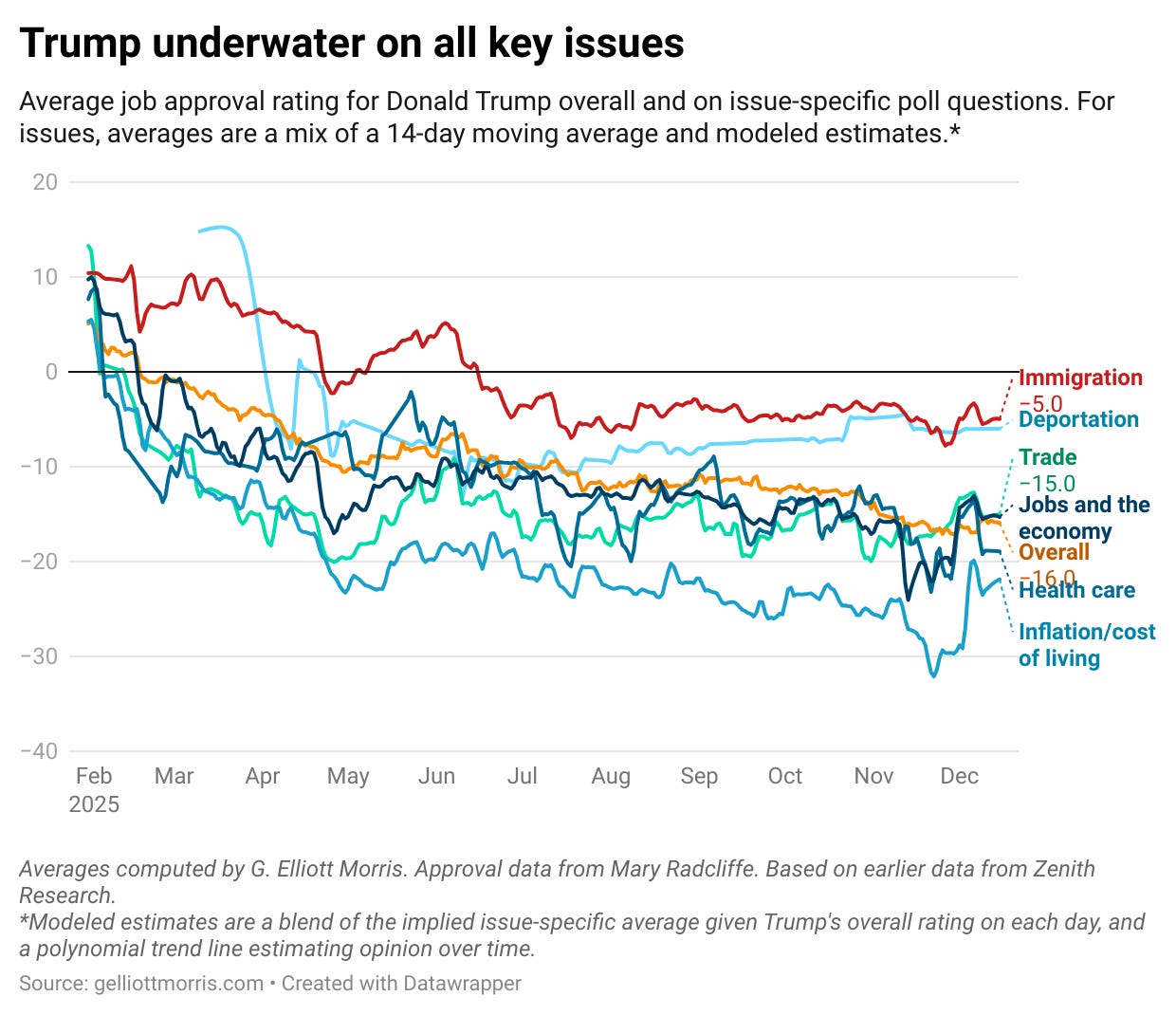
And this brings us to the present.
Last week, six months after the Justice Department bowed to public pressure and brought Abrego Garcia back to the U.S., a judge ordered that he be released from federal custody and prevented immigration officials from re-detaining him until they have final, lawful orders for his removal.
So, here’s how these events turned out: Abrego Garcia is currently out of custody, and Trump is massively unpopular, having faced major recent electoral and political setbacks. I think this is best described as a win for the people, like me, who pointed out the misled overconfidence of many Democratic Party elites (and, of course, for Abrego Garcia himself).
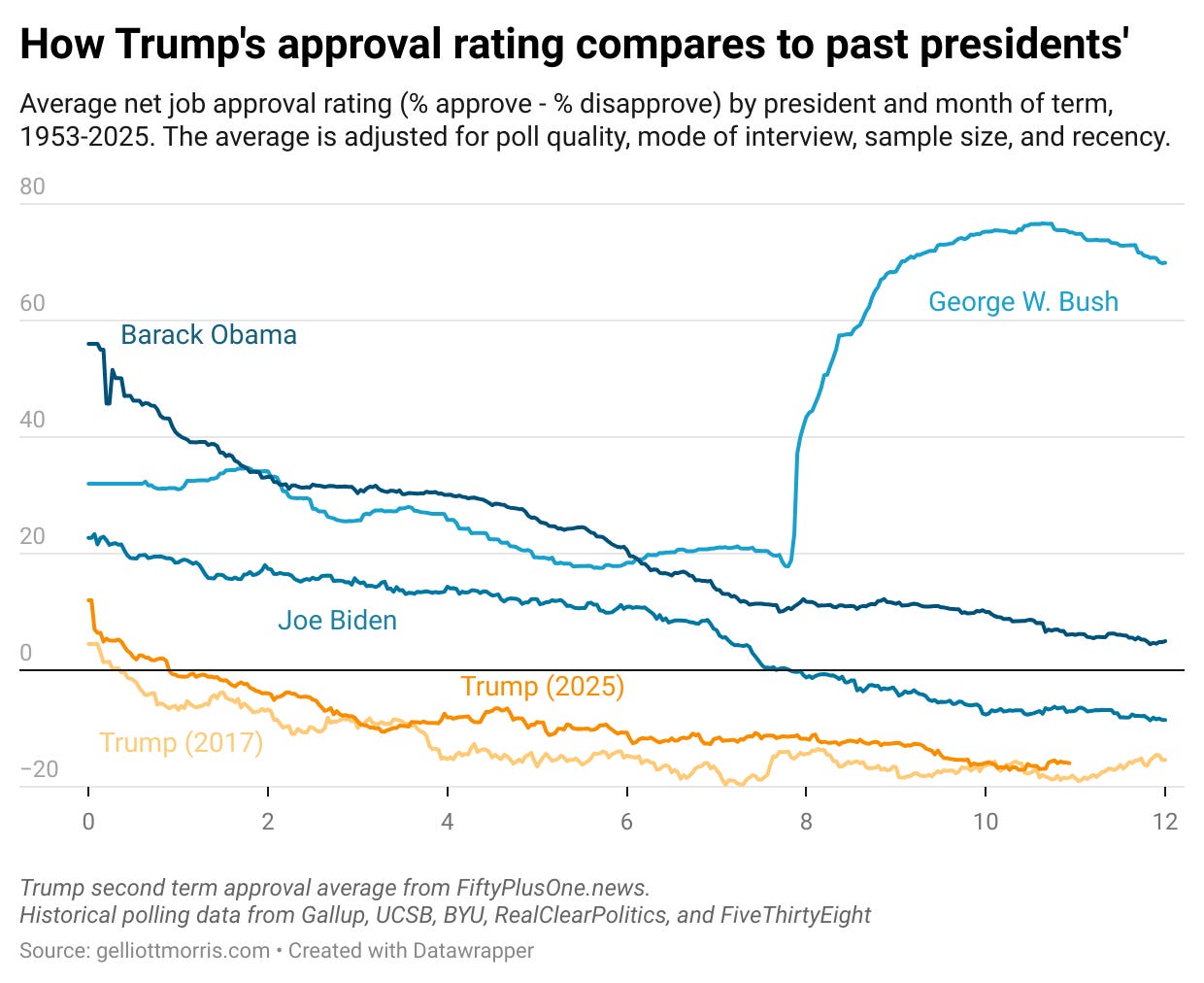
But, zooming out, I think it’s worth revisiting the question of Democrats’ strategy on immigration. The conventional wisdom — as seen in the outputs of Washington Super PACs and advice from figures such as Yglesias and Jeffries — is that Democrats need to avoid “increasing the salience” of immigration by not talking about it, shift the party’s policy toward Trump’s position, and hope voters move on.
The Abrego Garcia case suggests this is the wrong strategy. It is a positive example of how the party can handle tricky issues. We can also consider lessons from a negative example: Let’s take a trip abroad, where a center-left party has deployed the strategy of the Yglesias-Jeffries wing of the Democratic Party to complete and utter failure.
This is my premium Tuesday Deep Dive for paying subscribers of Strength In Numbers. Paid subscribers help fund the behind-the-scenes work that goes into analysis like this, and get exclusive content plus lots of other data-driven goodies that make it easier to separate the political signal from the noise.
Moving right on immigration has seriously hurt the UK Labour Party
Keep reading with a 7-day free trial
Subscribe to Strength In Numbers to keep reading this post and get 7 days of free access to the full post archives.