


This is my weekly Sunday roundup of new political data published over the last seven days.
Leading off: I wanted to take a break from politics this Sunday and cover new polling on something completely uncontroversial: whether America should end its twice-yearly practice of changing our clocks. This groggy writer has an opinion…
And, on deck this week: I’m finalizing the questions for our monthly Strength In Numbers/Verasight poll tomorrow (comment any late question suggestionds here!), and Tuesday’s Deep Dive will look at either the efficacy of a popular poll question that asks “Which party do you trust more to handle the issue of … X?” or take a look under the hood at some of my recent polling data on Trump support by various demographic groups.
Thank you for reading Strength In Numbers for another week! On with the data.
I. A plurality of Americans would make daylight saving time permanent
Here’s my attempt to diversify coverage here at Strength In Numbers beyond Donald Trump and elections or whatever’s leading the latest (let’s face it, recently pretty gloomy) news coverage.
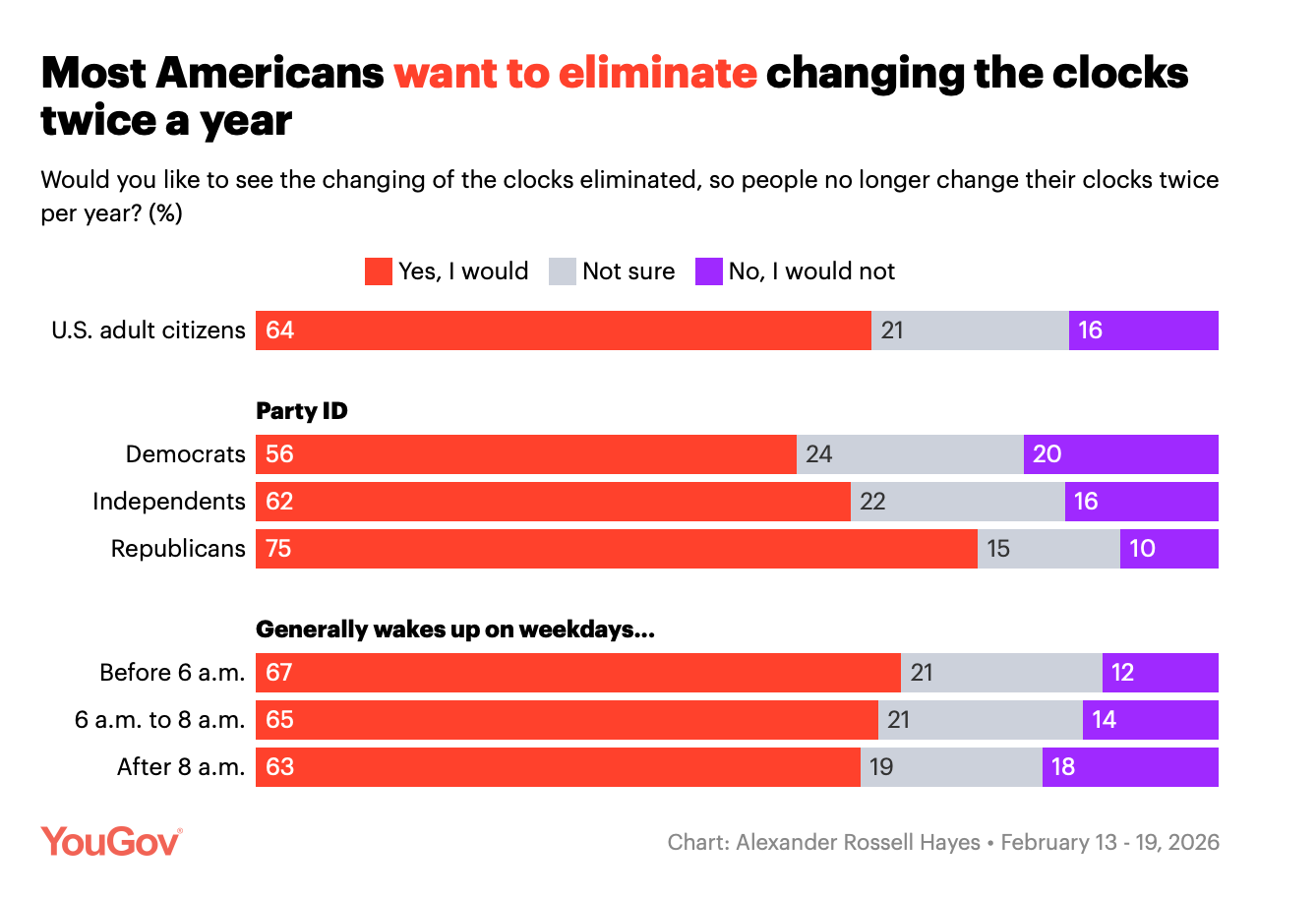
YouGov this week published results from recent polling on the (un)popularity of the twice-yearly time change. The company finds that nearly two-thirds (64%) of Americans want to stop changing the clocks twice a year, whereas only 16% want to keep the current system. And this is one of those rare issues where the parties are united, with majorities of Democrats, independents, and Republicans all agreeing it’s time (ha) to pick a time and stick with it.
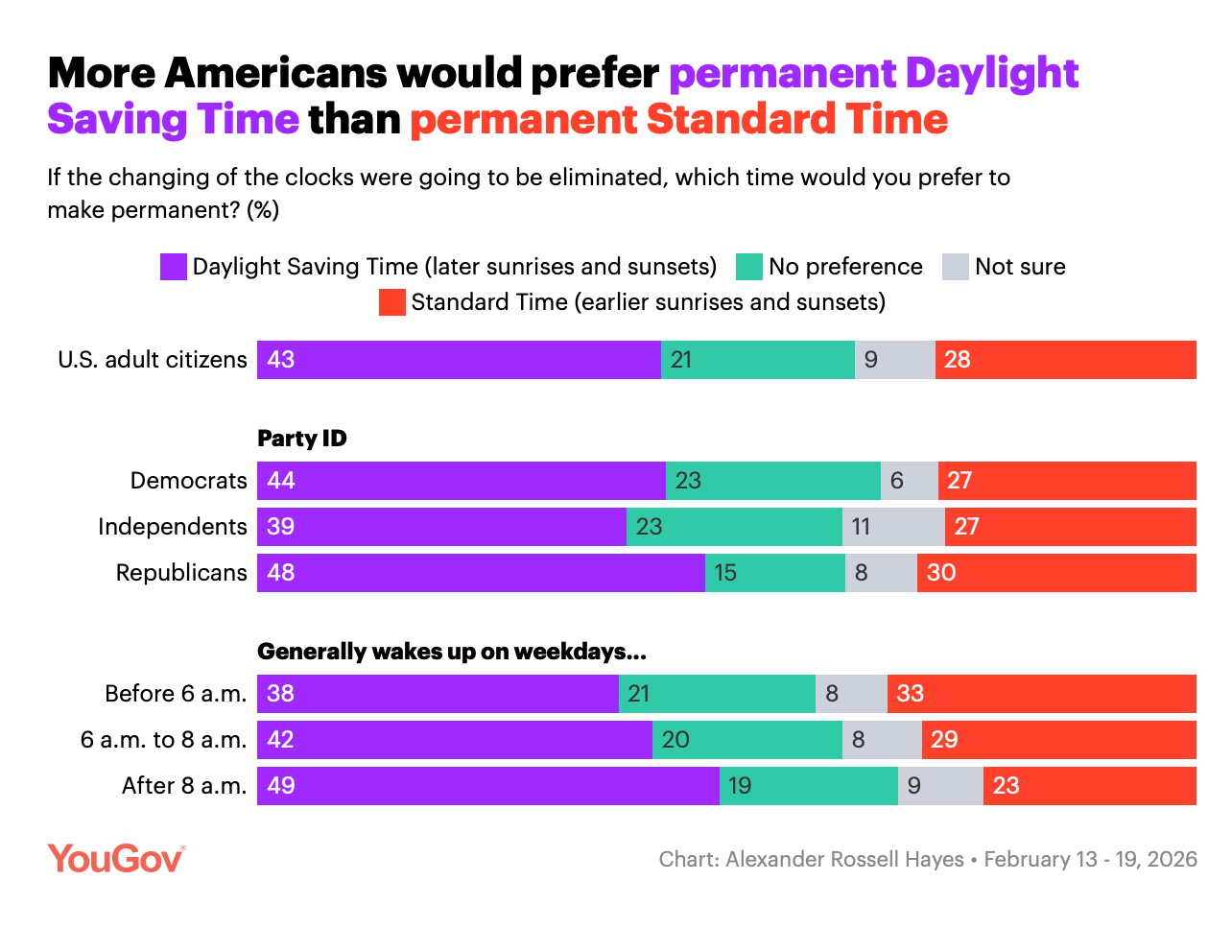
When given the choice, Americans prefer permanent Daylight Saving Time over permanent Standard Time, 43% to 28%. I was a little surprised by this given concerns about children walking to school in the dark in the morning, yet a majority says they’d rather it get dark later in the evening. In the fight between Daylight Saving Time (not “savings” apparently, which makes me think I just switched universes) and Standard Time, people pick DST (what we just switched to) nearly two to one.
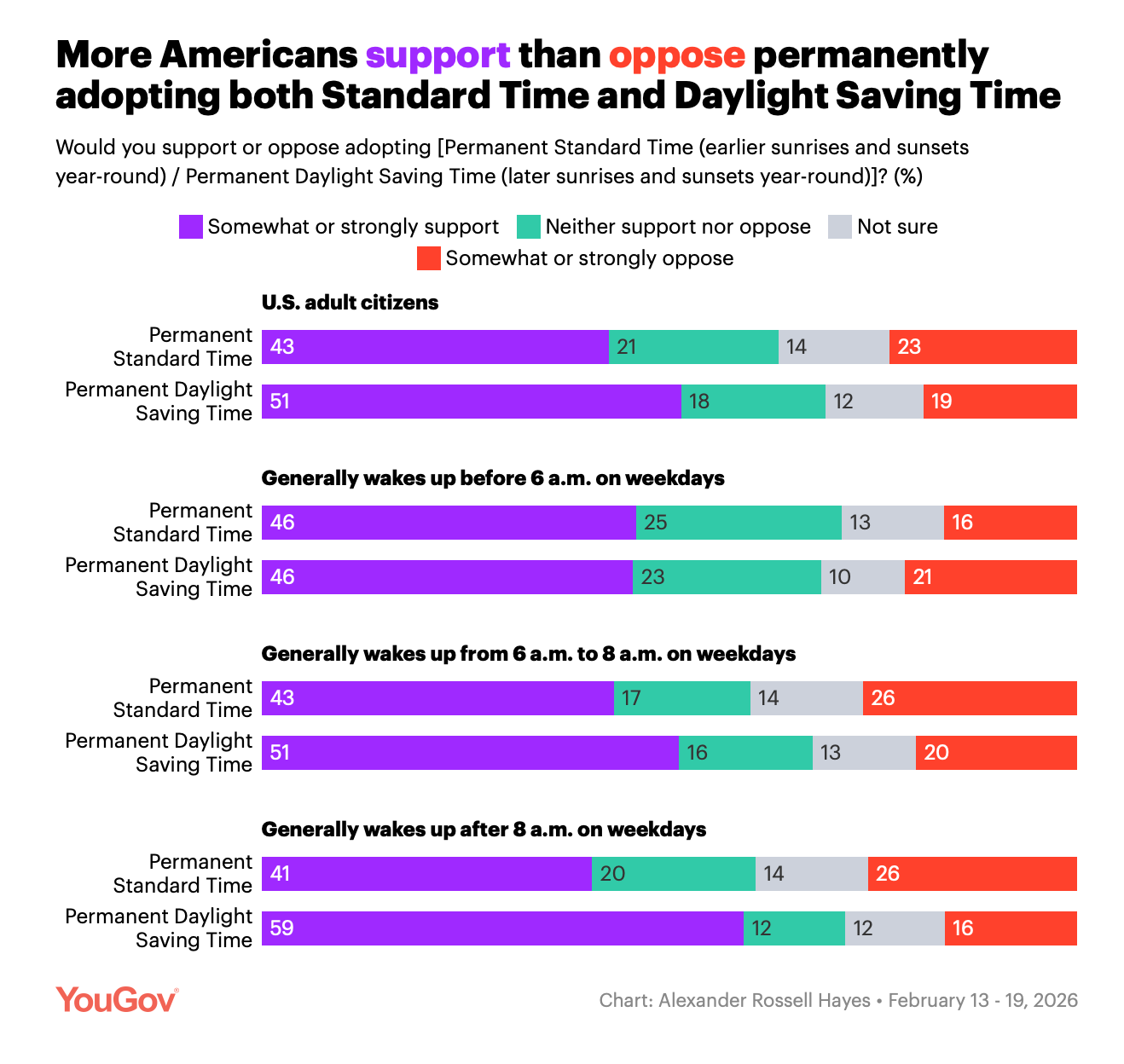
The real kicker here is that YouGov’s polling finds that most people don’t really care which option wins; they just want the switching to stop. Both permanent DST and permanent Standard Time poll above water. Also, whether you are a “morning person” or not makes little difference to which you prefer, which I find interesting (I am both a morning person and would like later evenings!).
As for your humble and groggy newsletter writer, he would prefer permanent DST for the simple reason that I like to cook dinner outside on an old Weber grill as often as I can (my dad did this a lot growing up), and the extra hours of daylight would make that experience more pleasant (last night I used a camping lamp to see my fajitas).
Some of you may remember Congress actually tried to fix this a few years ago. The Senate unanimously passed the Sunshine Protection Act in 2022, but it died in the House. The public support is clearly there if lawmakers want another crack at it. (Does anyone who reads this have Congressman Jonah Ryan’s cell phone number?”
Until then, we’re going to keep losing an hour of sleep each March. Yay!
II. What you missed at Strength In Numbers this week
I wrote five articles here at SIN this week. On Sunday, I wrote up what the first polls of Trump’s war in Iran were showing:

On Tuesday, I wrote about how question wording in polls really matters. On key policy areas, including immigration and transgender rights, slight changes in wording can produce big changes in public opinion and make it look like many Americans hold contradictory opinions:

Early Wednesday morning, I wrote an analysis of the Texas U.S. Senate primary results:

The weekly SIN podcast this week went over the Iran and Texas news:

My Friday Chart of the Week gathered up all the different polls of the U.S. attacks against Iran and looked at patterns in topline results, crosstabs, and question framing:

And I wrote an extra article Friday mid-morning connecting the new jobs report numbers, which were bad, with how Americans are feeling about Trump’s handling of the economy (also bad):

This is your regular reminder that if you frequently find yourself clicking articles from the list above, I’m confident you will get a lot of value out of a paid subscription. Paid subscribers get access to Tuesday Deep Dives, the full post archive, early access to new data products, and the satisfaction of supporting independent, data-driven political journalism.
III. Even more numbers!
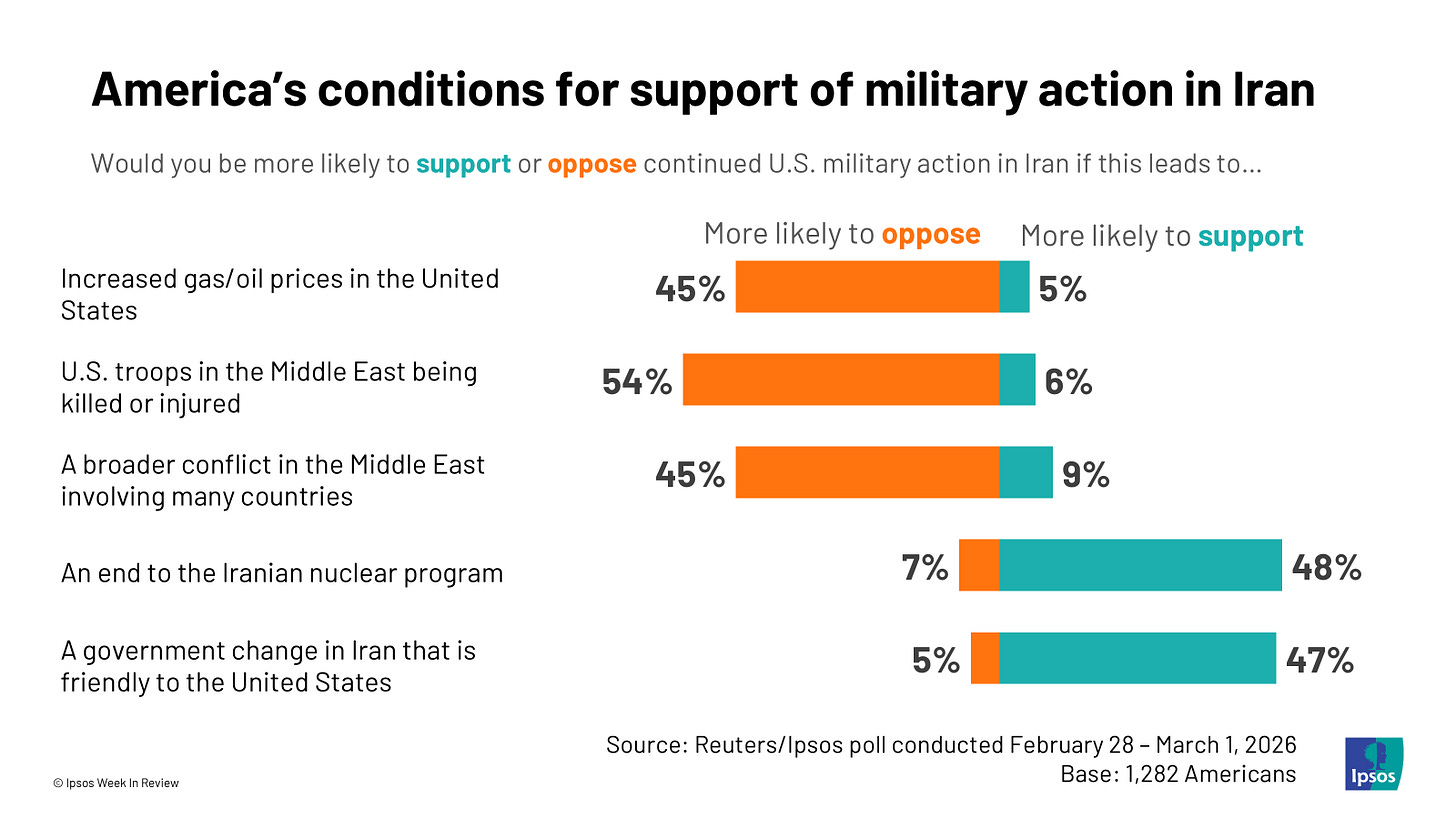
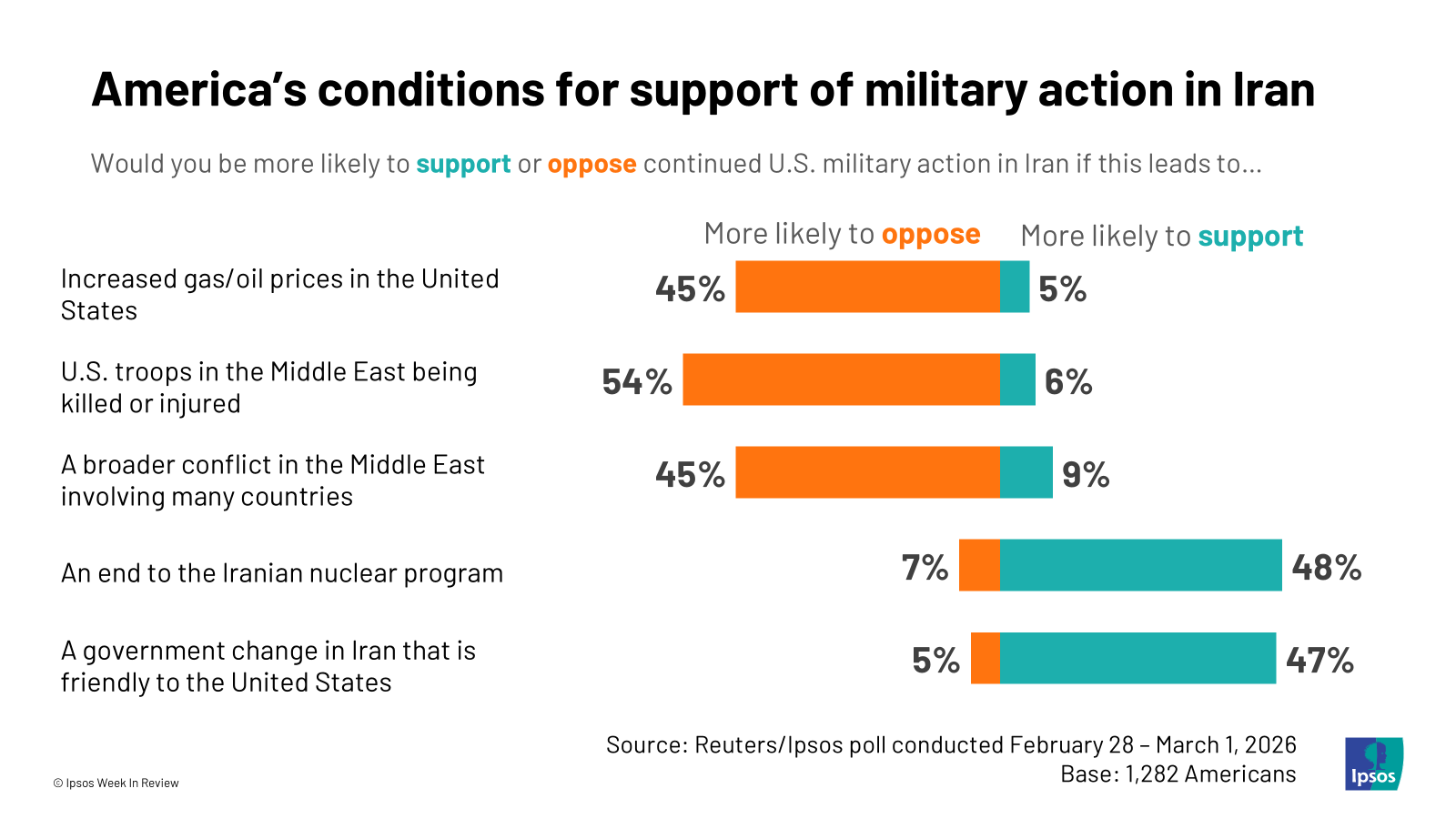
Ipsos: Americans think the war with Iran could become a genuine affordability problem:
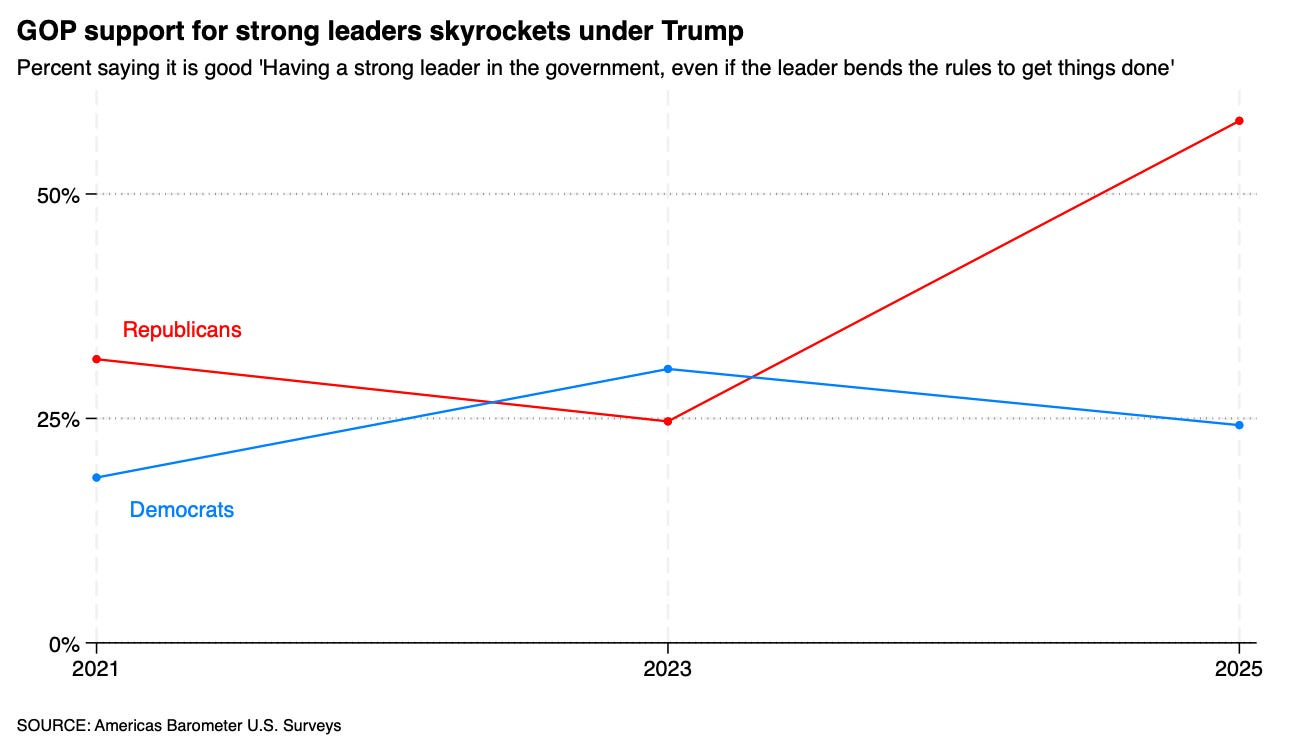
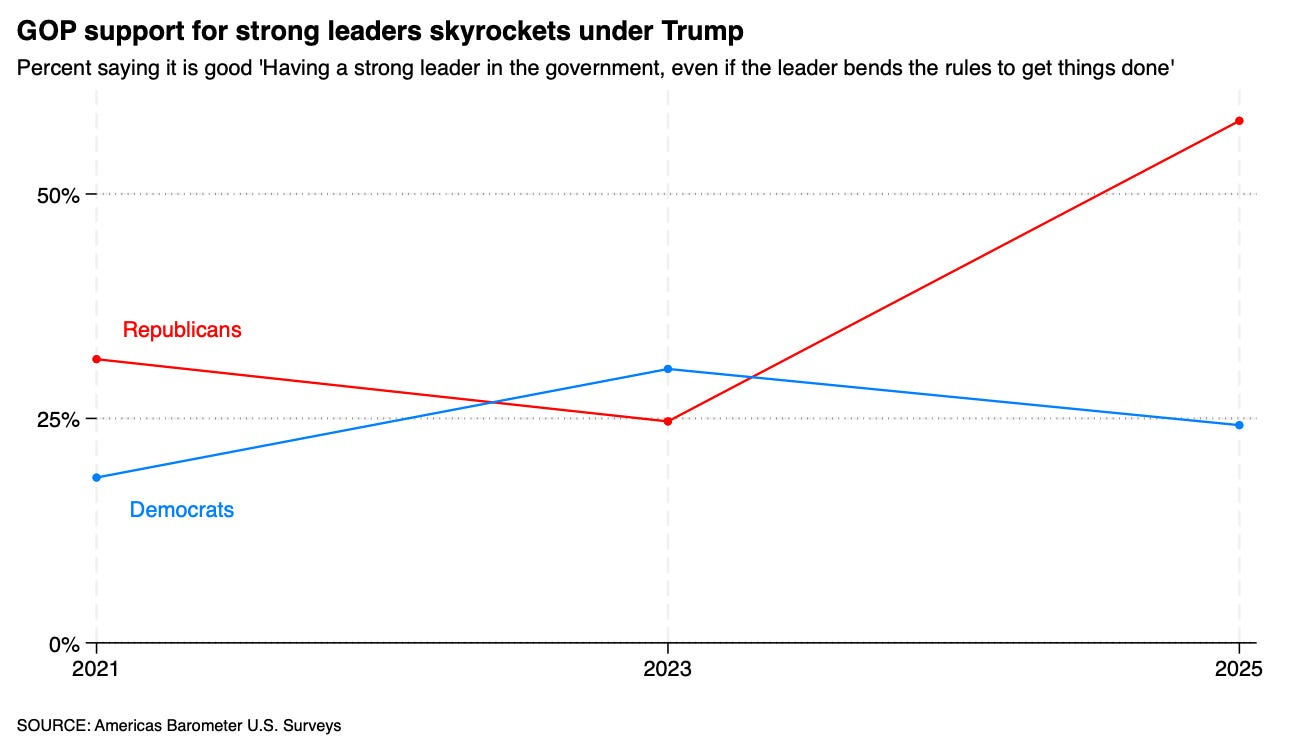
John Sides at Good Authority shows Republicans are more likely than ever to say they support having a “strong leader” who “bends the rules” to accomplish his goals:
Pew finds Americans rate other Americans more bad than good, and the most negative of any country they polled. Canadians, meanwhile, are singing “la la la la laa” down the street.
Michael McDonald breaks down Texas voting patterns.
A Chicago Council poll finds most Americans think Congress should rein in the president’s military powers.
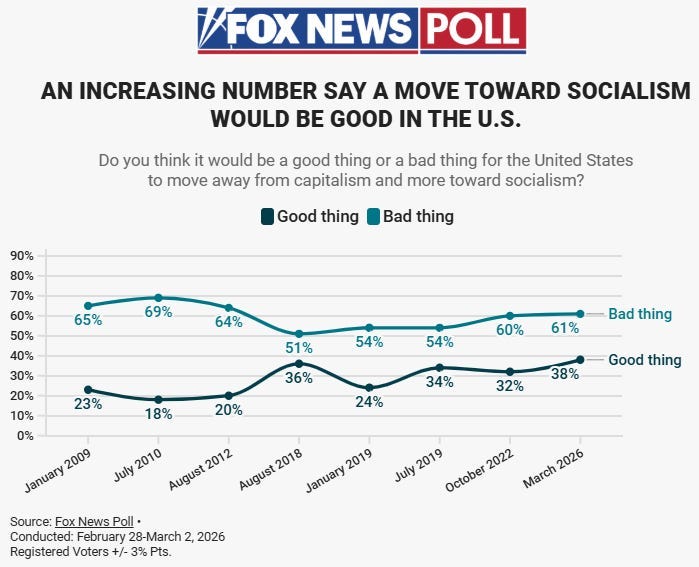
And finally, two new polls show rising shares of progressive attitudes on various issues. Fox finds more Americans than ever think socialism would be good, while Gallup finds support for free trade at an all-time high.

Trump’s job approval rating among all adults today is 38.7%, and Democrats lead on the generic ballot by 4.6 points among registered voters.
And that’s it for this week! Thanks for reading. Strength In Numbers will be back in your inbox Tuesday!
Elliott
Got more for next week? Email your links or add to the comments below!
It has to be standard time. DST is a disaster. One of the most ridiculous things any government has ever done. Hours are meant to describe the position of the sun; not an arbitrary number. We evolved with sunlight as our guide. It’s why we have a circadian rhythm. DST throws that biological reality out the window so you can pretend that it’s light out at an arbitrary hour.
What's interesting is that, as a group, scientists argue for permanent standard time, not permanent DST. Among other benefits they cite are reduced risks for obesity and stroke.