

52 percent of U.S. adults say Trump has made the economy worse
Three major polls this week show Americans remain deeply pessimistic about affordability, opportunity, and their economic future. Your weekly political data roundup for February 8, 2026.

Happy Super Bowl Sunday! Here's your weekly roundup of new political data published over the last seven days. It is free to read.
I’ve written a lot about ICE and immigration over the past week, so for the sake of “the mix” (as they say in newsrooms), today’s note will be about the economy. The Pew Research Center, Gallup, and CBS News all released new surveys this week showing that Americans remain deeply pessimistic about jobs, prices, and their futures — and most say President Donald Trump had made things worse.
On deck this week: Tuesday’s Deep Dive will either take a look at the research on why the Democrats won the 1992 election, OR preview estimates of state-level Trump approval on the economy, immigration, and health care. Friday’s Chart of the Week will, as usual, respond to the week’s news.
Let’s dig into the numbers on how Americans are feeling about the economy.
I. A flood of bad economic numbers for Trump
Three major polls landed this week, all painting the same picture that Americans think the economy is not working for them.
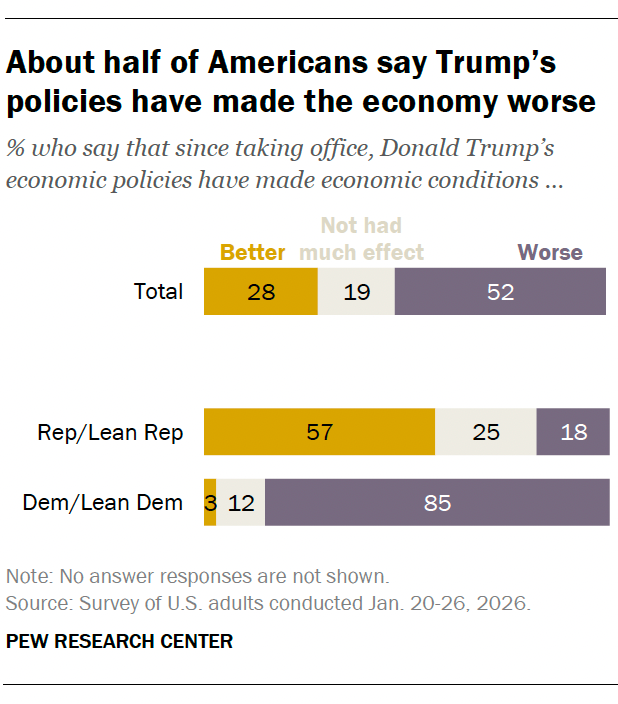
A Pew Research Center poll found that most Americans continue to hold negative views of the economy. The pattern that has persisted for six years now, spanning both the Biden and Trump presidencies. Perceptions have not improved during the first full year of Trump’s second term, which has hurt him politically: 52% of adults say Trump’s policies have made the economy worse (this validates some Strength In Numbers/Verasight polls from last year).
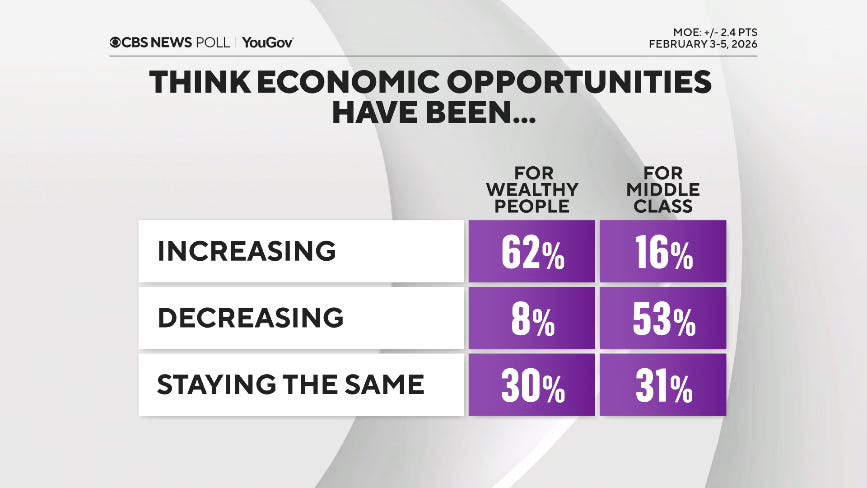
Then, CBS News, polling from February 3-5, found pessimism is pervasive in many aspects of American life. Big majorities told CBS it’s harder today to buy a house, find quality employment, and raise a family compared to previous periods. Most see opportunities increasing for the wealthy while decreasing for the middle class. Only one in five expect economic growth within the next year.
And Gallup, in a long report released February 3, put the U.S. in global context. Its 107-country survey found that economic anxiety is a worldwide phenomenon, but Americans — particularly young Americans — stand out. 32% of residents ages 15 to 34 said economic issues were their top concern, while 13% of adults ages 55 and older said the same.
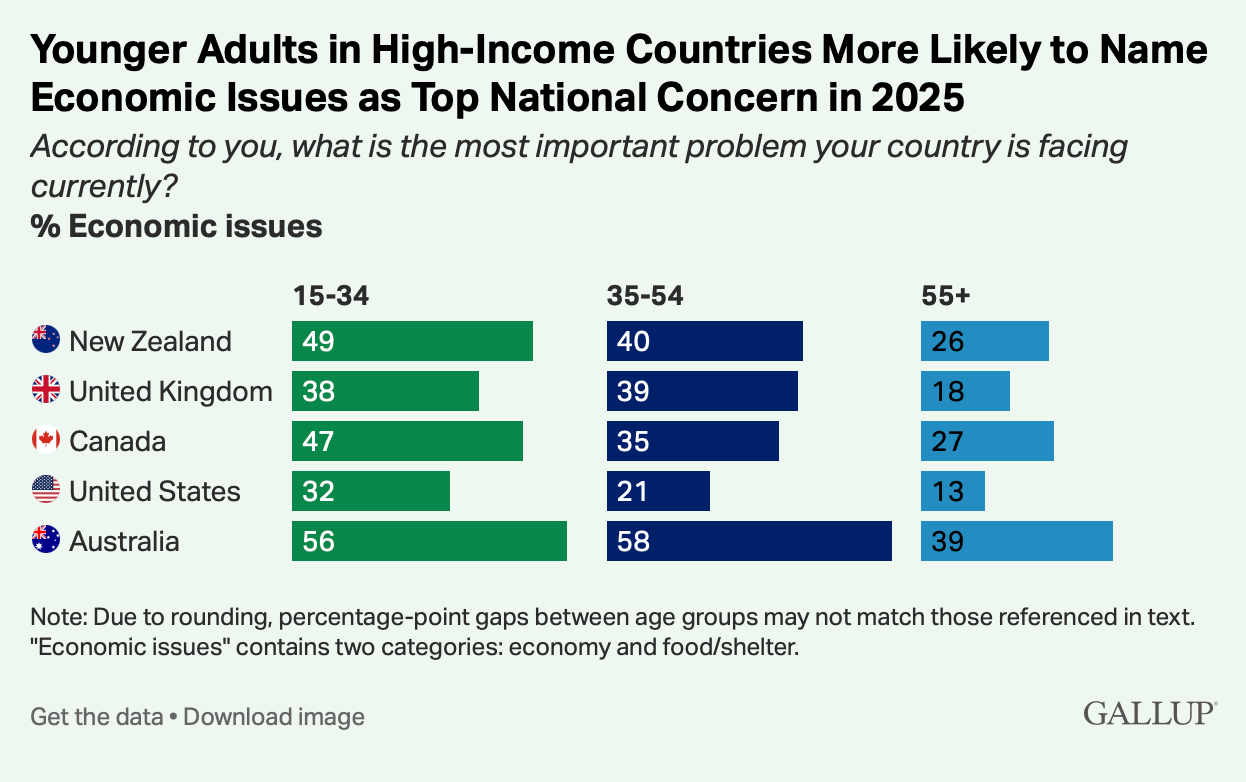
Gallup notes that in high-income countries, the generational gap is wider.
Now, taking off my pollster hat and putting on my analyst hat, some thoughts on implications:
Democracy and elections are largely an elite project; when conditions for the masses degrade, support for the political system — and the incumbent party — goes with it.
Trump won in 2024 mainly because voters were mad about the economy. But a year into his second term, they’re still mad, and they’re mad at him in particular. And the CBS data underscores that economic pessimism isn’t just about prices and sticker shock; a large share of Americans doubt that the whole system works for them anymore. We are living in an era of pronounced anti-system sentiment, tied to perceptions of economic immobility.
And the Gallup numbers for young people reinforce my long-argued position here at Strength In Numbers that the swing among young voters from 2020 to 2024 should be viewed not as a political/ideological statement from those groups, but an economic one. Trump made serious gains with young people — mostly men — in 2024 by promising economic relief. In 2025, we saw how that group would vote if the president didn’t keep his promise.
Trump is saying his presidency has been great for prices and the average voter. He is staking his party’s 2026 campaign on the idea that he has solved the affordability crisis. But as president, he now has to confront his actual record. Trump is a major antagonist in the fight for cheap goods and an economic future for young Americans. He was in Iowa two weeks ago promising to lower housing prices, then said the next day that he was going to keep prices high: “People that own their homes -- we’re gonna keep them wealthy,” Trump said, “We’re gonna keep those prices up. We’re not gonna destroy the value of their homes so that somebody who didn’t work very hard can buy a home.”
Trump is trying to drag Democrats into a fight about prices and affordability. He won’t win that fight.
II. What Strength In Numbers published last week
Subscriber to Strength In Numbers got five articles over the last week:
Friday’s Chart of the Week looked at what Americans actually want done about immigration enforcement:

In our weekly podcast, David Nir and I argued that Democrats should run on ICE reform and deportations as a campaign issue:

Tuesday’s Deep Dive examined new evidence that a large share of self-described “moderates” are non-ideological:

On Monday, I did a live podcast with my friend Michael Podhorzer in which we discussed the Texas special election and what it tells us about the 2026 political environment:

And last Sunday’s roundup covered the Fox News generic ballot results and Democrats’ historic high in Fox News polling:

If you’re a frequent reader of Strength In Numbers, I’m confident you will get a lot of value out of a paid subscription. Paying members get access to Tuesday’s premium Deep Dives, the full archive, and the knowledge that they’re supporting independent, data-driven political journalism.
III. Even more numbers!
Pew finds economic views remain negative a year into Trump’s second term: report link
Gallup on economic anxiety as a global phenomenon
CBS poll on vanishing economic opportunity
Gallup’s global polling also finds Americans are deeply anxious about the political system
Quinnipiac: 61% say Trump hasn’t been honest about Alex Pretti shooting
Data for Progress on ICE unpopularity and removing Noem and Miller
Marist polls on public views of ICE actions: Poll link
Elaine Kamarck at Brookings asks: Can ICE cost Republicans the Senate?
Blueprint message testing for Democrats: Fight the Villains, Defend the Dream, Anti-Woke is Broke
Seth Masket at Tusk on why moderating and ceding ground to lies doesn’t work
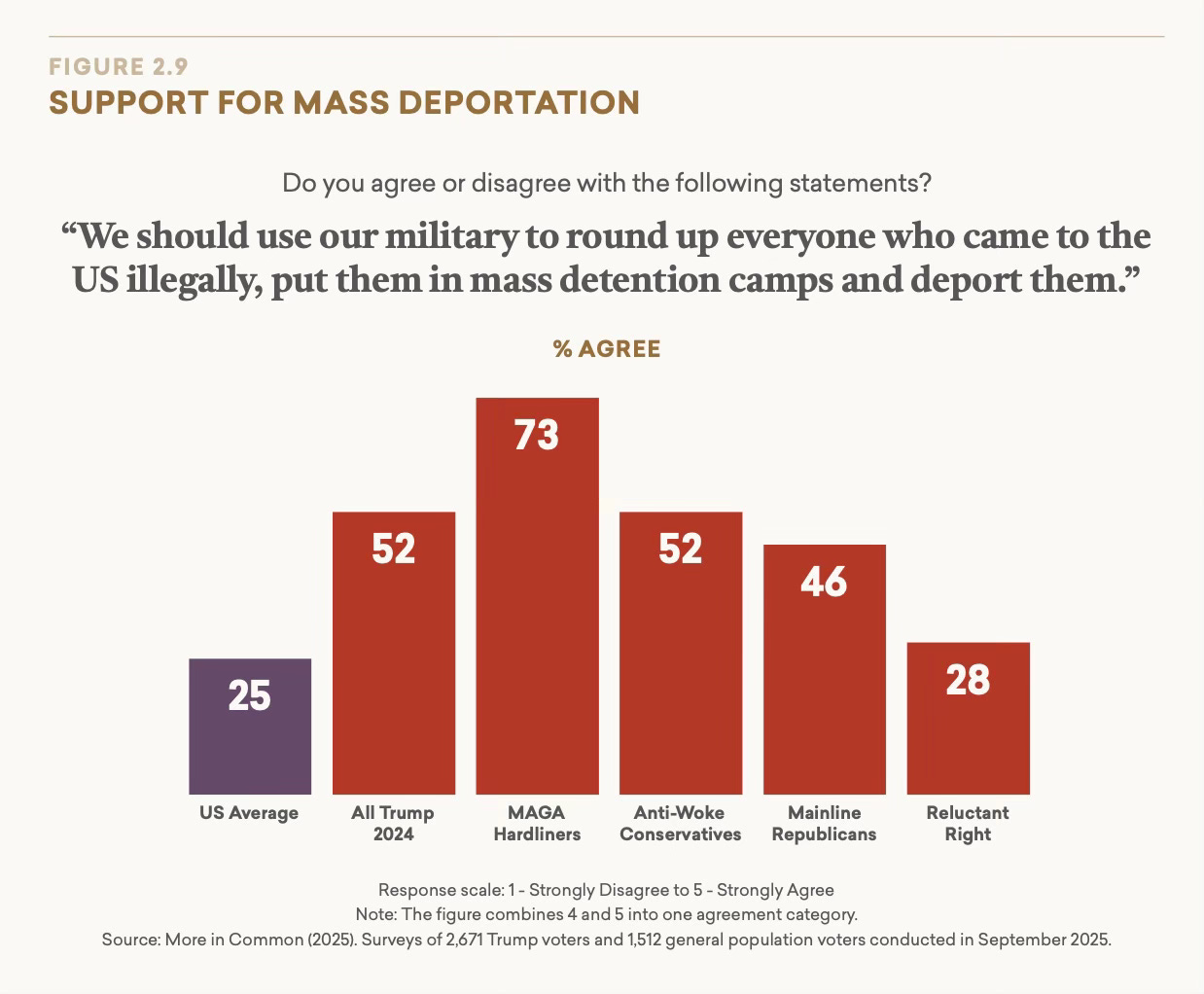
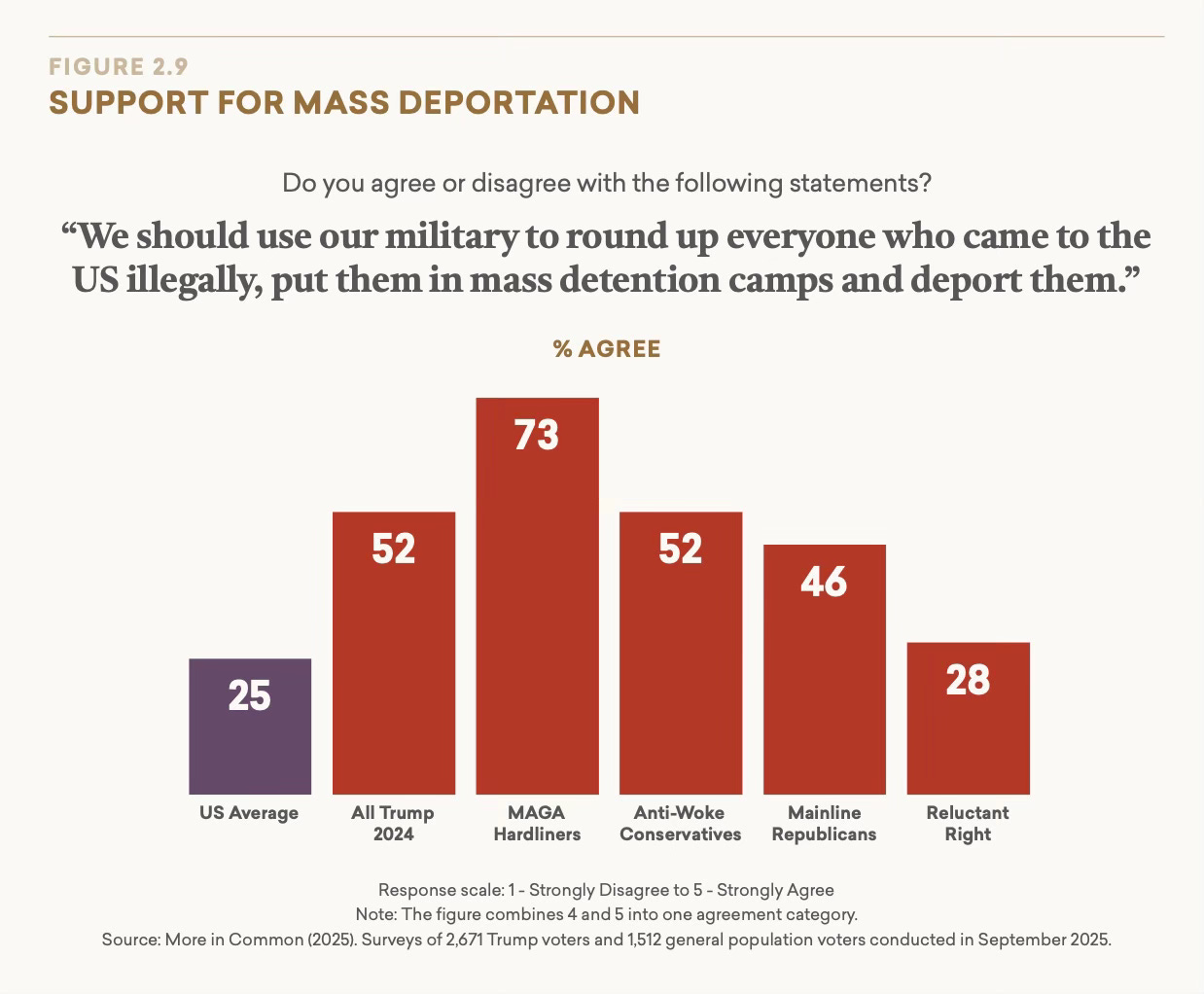
More in Common on immigration attitudes beyond MAGA
Cato Institute confirms immigrants pay more in taxes than they take in benefits: Immigrants’ Recent Effects on Government Budgets: 1994–2023
The Minnesota Star Tribune maps how immigration detainees move around the country: How immigration detainees move around Minnesota and the nation
Ryand Burge: Religion, not income, is the key predictor of the American vote
Here’s an old article for me on religion being a stronger predictor of social attitudes than age, gender, race, or party
Bruce Mehlman’s six charts on blue-collar economic struggles
Gabe Fleischer: Trump’s GOP Makeover is Almost Complete
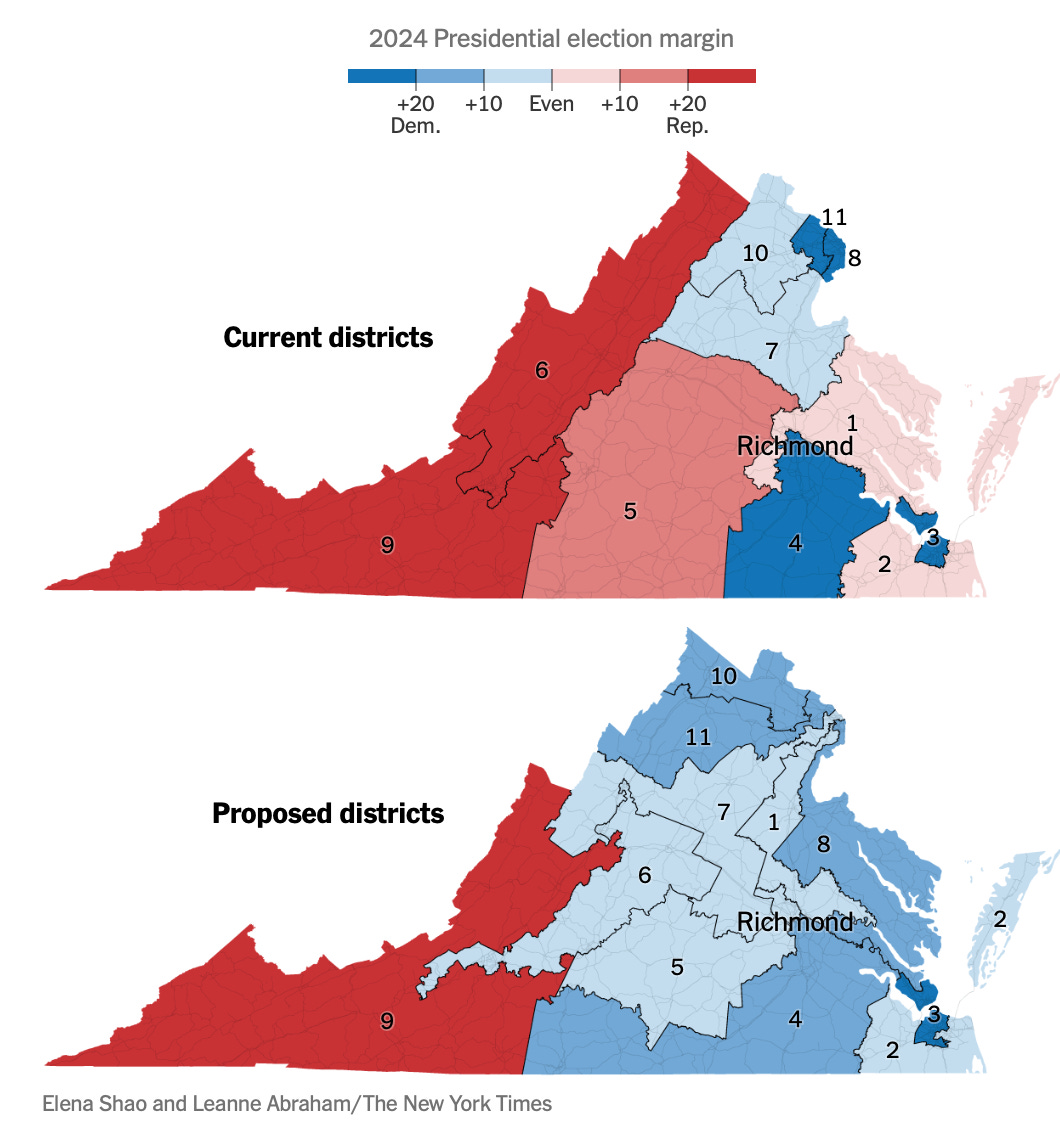
NYT: Virginia Democrats propose new congressional maps for 2026
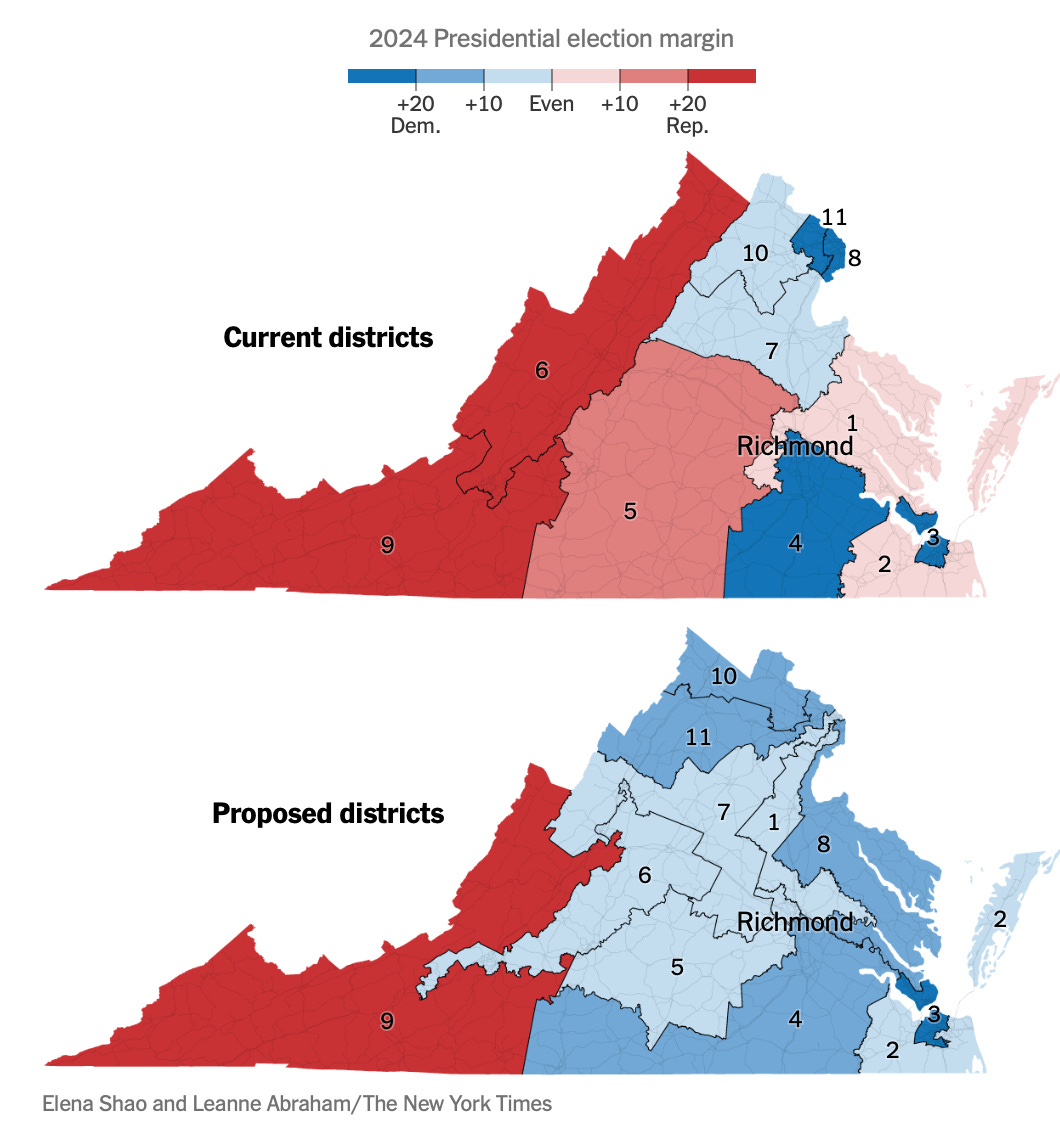
Jacob Rubashkin: Could Latinos break the Texas gerrymander?
Vox on why the House is too small
And finally, on the big progressive win in the NJ-11 Democratic primary this week: Analilia Mejia clings to lead in tight New Jersey election
IV. Polling update
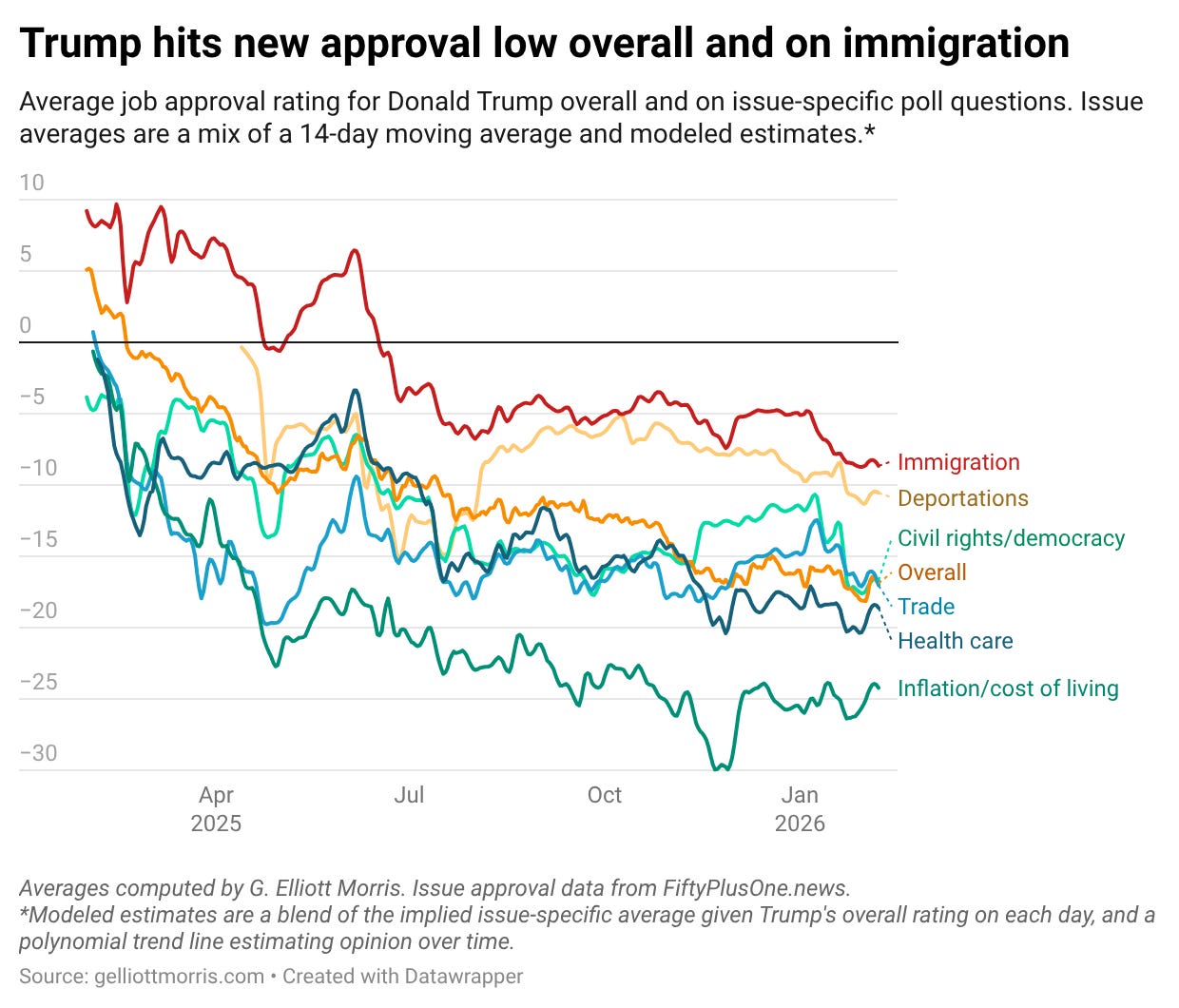
Trump’s net job approval is -17, up slightly but within the margin of error with last week.
As I discuss on this podcast, even polling averages have a bit of uncertainty driven by poll sampling error, house effects and such, so you shouldn’t take jumps less than 1 point on the percent scale (<2 on the margin scale) too seriously.
The generic ballot is D+4.5 (rounding up to D+5 on the FiftyPlusOne page), holding steady since last week.
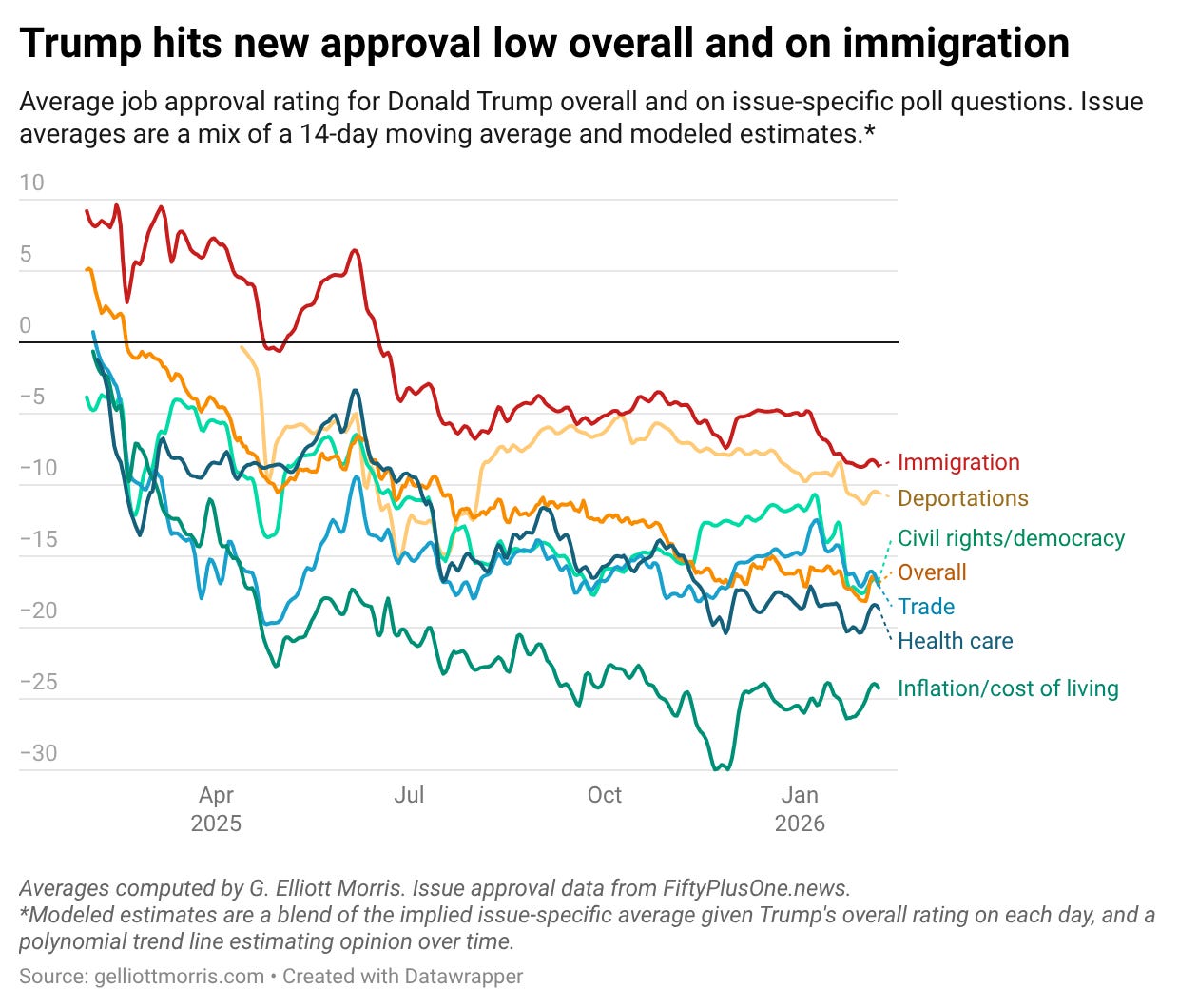
Updated Trump issue approval data:
And that’s it for this week! Thanks for reading. Strength In Numbers will be back in your inbox Tuesday!
Got more for next week? Email your links or add to the comments below!
Elliott
I have a question that is perhaps tangentially related to a topic in this column — feelings about the economy. I’m not sure how much the jobs report influences those feelings, but as you’re likely aware, the jobs report for January was terrible; something like 108,000 jobs lost, which is the worst for a single month since like 2009. Anyway, I’m wondering if the numbers are even worse because Trump fired the previous head of BLS because he didn’t like the numbers they were delivering. So, long story long, I’m wondering how much confidence we should have in BLS data and do we have any way of checking numbers against, for lack of a better phrase, the typical or traditional way they were calculated? Thank you!
“52% of adults say Trump’s poocies has made the economy worse.” Please be a grownup and just call it “incontinence.”