



In the newest live recording of the Strength In Numbers podcast, Elliott and David Nir, publisher of The Downballot, talk about the latest news in elections, politics, and polling.
We cover:
“Anti-system” voters explain Trump’s wins better than left-right ideology. A recent study of polling data from the American National Election Study shows frustration with government and elites predicted whether someone would vote for Trump in 2016 and 2024, regardless of someone’s left-right ideology. This suggests parties don’t win elections solely by moving to the ideological center, but by appealing to them on the “anti-system” axis, too. The implication for Democrats in 2028 is that they should find a candidate who channels anti-system energy. Trump lost these voters as the incumbent in 2020, and Republicans will face the same problem in 2028.
The DHS shutdown is electoral signaling, not just an appropriations fight. Democratic Sen. Cortez Masto — a moderate who broke ranks during the last shutdown — is now holding firm, citing polling that Americans support body cam mandates, judicial warrants, and an end to masking by ICE agents. A poll from Hart Research shows voters back the Democratic position on the shutdown 54-36. In reframing immigration from “border security” to “mass deportations,” Democrats are moving the issue in their favor ahead of November’s midterms.
This week, a huge controversy over a poll about trans rights is a case study in bad polling journalism. The write-up of the poll argued politicians should move right on trans rights, a position the editor of the publication that sponsored the survey later disavowed. The poll also cherry-picked common GOP attack lines on the issue while ignoring the popularity of anti-discrimination protections. Recent polls and election results have shown Democrats can have success in reframing the debate away from gotcha questions, as Abigail Spanberger in Virginia and John Ewing, the mayor of Omaha, Nebraska, have shown.
If you missed our livestream, you can watch it by clicking play above. We record the podcast live every Thursday at 2:00 PM Eastern. We always discuss a few pre-planned newsy topics or deep dives and then answer questions submitted live by viewers. You can also subscribe to us on your favorite podcast app to listen on your own time. And if you do listen via one of those apps, please drop us a five-star review if you feel we’ve earned it — it really helps people discover the show!

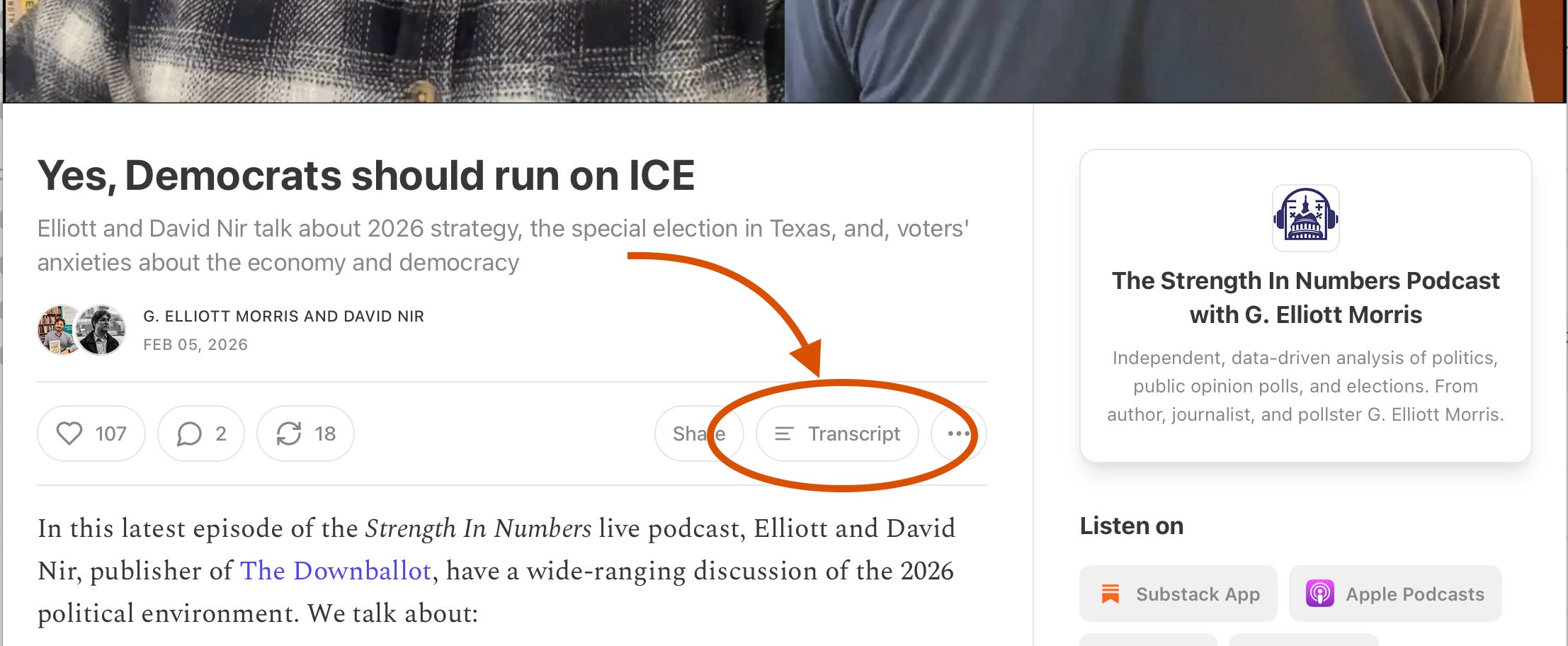
You can also read the transcript of our conversation by clicking the headline of this article to take you to the web version of the podcast, then clicking the button just below the byline that looks either like a piece of paper or is labeled “Transcript,” like so:
If you’re a reader of Strength in Numbers and haven’t yet subscribed to David’s newsletter, head to the-downballot.com. And if you’re coming from David’s audience, subscribe here to get the numbers behind the news.
Paid subscribers get to participate in our live Q&A!


