



In this week’s live recording of the Strength In Numbers podcast, G. Elliott Morris and David Nir, publisher of The Downballot, talk about prediction markets and AI “polls” — the new hot crazes in political and election reporting. Elliott and David take a look at the accuracy of each source and compare them against traditional polls.
Here are the big takeaways:
Prediction markets have real structural problems that their boosters ignore. Polymarket’s user base skews toward crypto holders — young, male, Republican-leaning — and bogus trades account for significant volume, distorting prices. To take one example: A single French trader moved Trump’s market price in 2024 with over $30 million in bets. The efficient-market framing that prediction market advocates rely on simply does not hold up in real life.
Markets mostly just follow the polls. Research by Robert Erikson and Chris Wlezien on older digital marketplaces found that once you account for polls in a forecasting model, market prices add essentially nothing to your prediction on average. Newer models may produce better signals, but they’re still untested.
Market predictions in 2022 failed badly. In the last midterm elections, markets gave Republicans a 73% chance to control the Senate, while FiveThirtyEight correctly called it a coin flip; Democrats held the Senate. Even in 2024, when markets beat polling models in the presidential race, statistical models outperformed markets on down-ballot contests, where thin markets with few informed participants produced worse prices than the polls.
Synthetic polling is not polling. Recent surveys from Heartland Forward and the Public Sentiment Institute padded their samples with AI-generated “respondents” rather than real people. Such approaches have promise in prediction, but you cannot create new information about public opinion by generating more synthetic data from a large language model. Until robots get the franchise, Elliott will only aggregate surveys of actual humans.
If you missed our video livestream, you can watch it by clicking play on the web version of this post. We record the podcast live every Thursday at 2 PM Eastern. We always discuss a few pre-planned topics and then answer questions submitted live by viewers.
You can also subscribe to us on your favorite podcast app to listen on your own time. And if you do listen via one of those apps, please drop us a five-star rating and review if you feel we’ve earned it — it really helps people discover the show!
A reminder that paid subscribers to Strength In Numbers get to participate in our live Q&A!

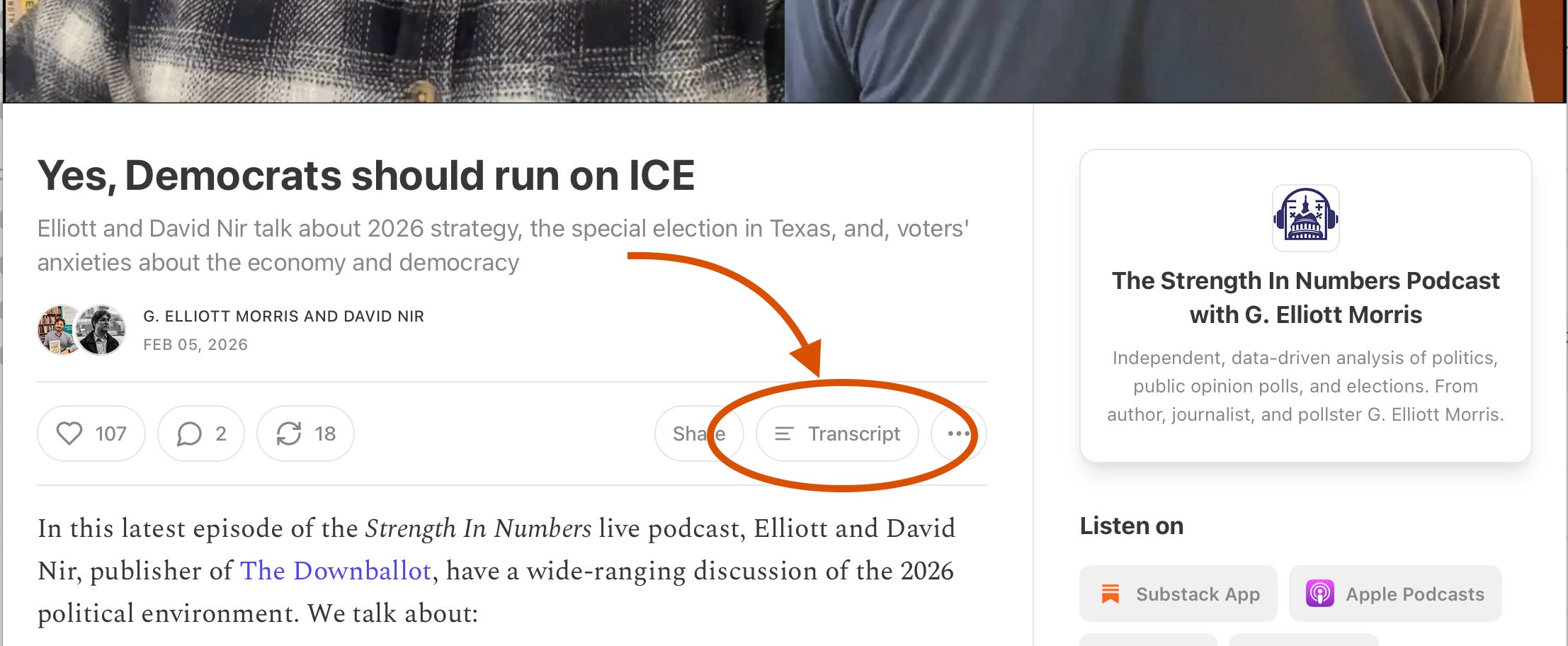
You can also read the transcript of our conversation by clicking the headline of this article to take you to the web version of the podcast, then clicking the button just below the byline that looks either like a piece of paper or is labeled “Transcript,” like so:
If you’re a reader of Strength in Numbers and haven’t yet subscribed to David’s newsletter, head to the-downballot.com.
And if you’re coming from David’s site, subscribe here to get the numbers behind the news.


