


“Are you better off than you were four years ago?”
This old line from Ronald Reagan’s 1980 campaign for president encapsulates a surprising breadth of political science on American elections. Unpopular presidents and their parties tends to perform poorly; this is worse when the economy isn’t growing or inflation is high; and in midterms, there is a nearly unavoidable pattern by which voters en masse decide on rhe need to throw the bums out.
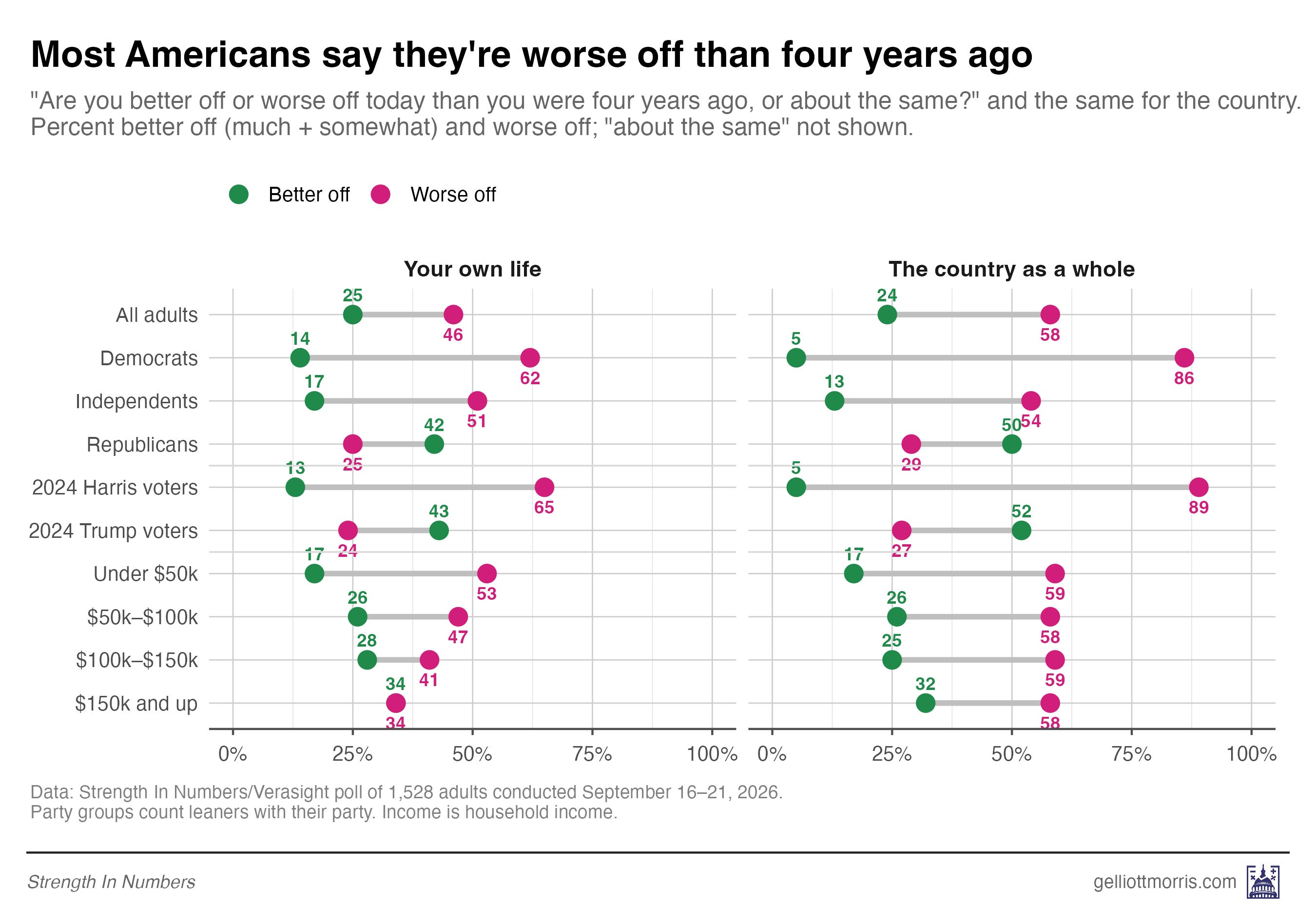
In our September Strength In Numbers/Verasight poll, a plurality of voters say they are not doing better than they were four years ago. The new poll interviewed just over 1,500 adults from September 16-21. Overall, 46% of Americans say their own life is worse off than four years ago, and just 25% say it’s better. When we asked respondents the same question about conditions in the country as a whole, 58% say they are worse off: 40% much worse, 18% somewhat. Just 24% say better.
The poll also finds voters want Congress to act as a check on President Trump.
Full toplines and a methodology description are available here, as are crosstabs. More numbers and charts for this week’s Friday column below.
Here’s my pitch to you to support this work with a paid subscription.
Strength In Numbers pioneered independent polling on Substack in 2025, when I noticed many media outlets weren’t conducting surveys outside of the election season, and their pollsters don’t have the time or the freedom to try new ways of measuring public opinion. The SIN/Verasight polling partnership was formed to help fulfill this publication’s mission of making knowledge and analysis of public opinion part of the republican (note the lower-case “R”) infrastructure of our modern democracy.
If you support that mission, consider becoming a paying subscriber to Strength In Numbers. You’ll get access to our private community on Discord and get additional premium analysis at least once weekly. Paying members of this community keep Strength In Numbers running by supporting the time and data collection it takes to do analyses like this one.
And a yearly subscription is really a great value. While a lot of election analysis websites fall off after Election Day, through this project and others, SIN promises to be here publishing new polls and analysis in both the on- and off-years for many cycles to come!
Better off than 4 years ago?
In my first write-up of our new poll results on Tuesday, I showed how Donald Trump’s approval rating has taken a particularly severe dip among self-identified Republican voters over the last 30 days. His net approval with his own base is +43 today — a much softer embrace than Democrats’ opposition, which sits at about -90.
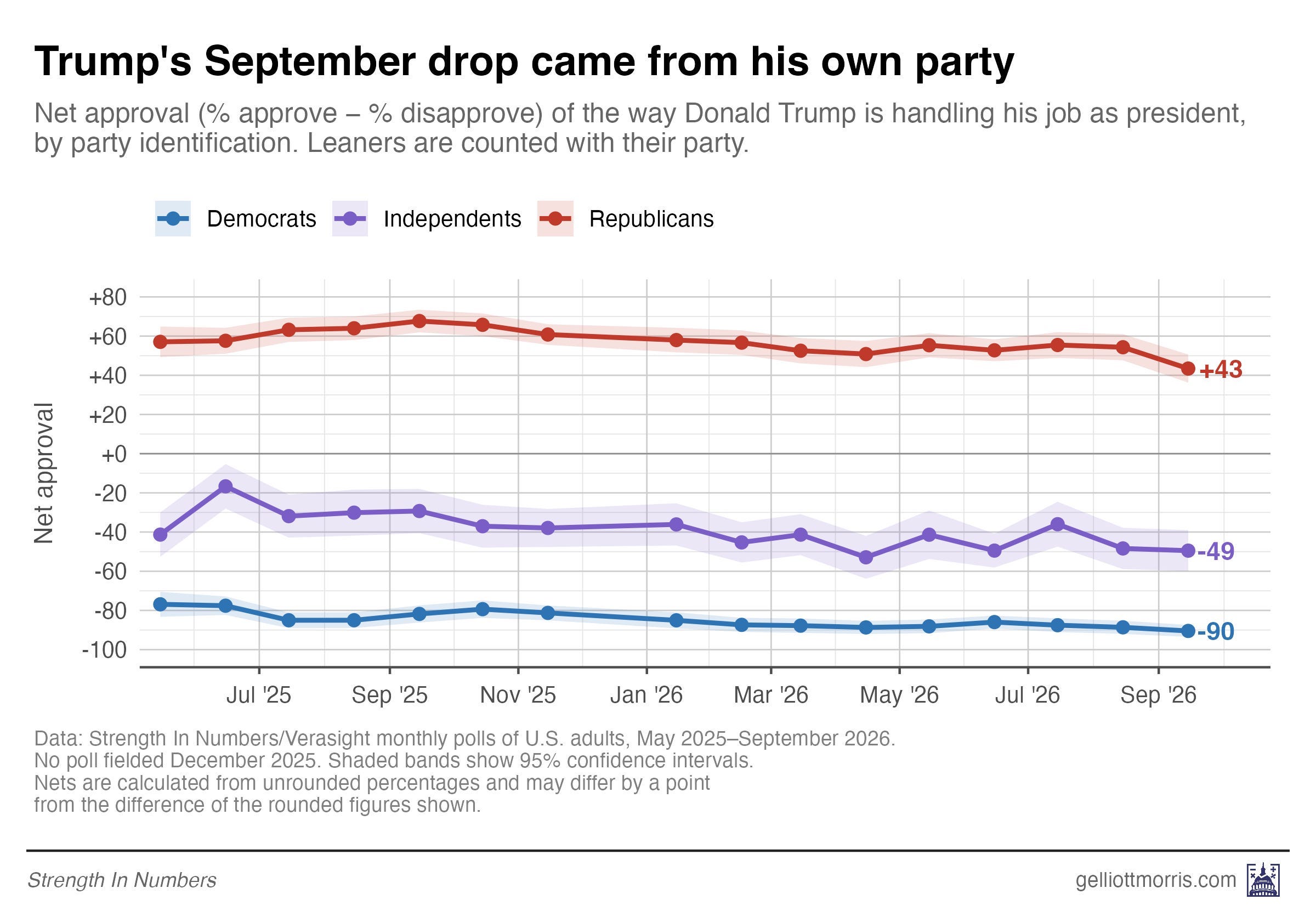
This malaise among his base extends to the “better off/worse off” question too. In our new poll one in four Republicans, and one in four of Trump’s own 2024 voters, say their own lives are worse off than they were four years ago. 29% of Republicans say the same about the country.
The chart below shows lower income voters in particular feel that they have fallen behind under Trump. Among families making less than $50,000 a year, opinion is divided between 17% better off to 53% worse. Above $150,000, the options are even at 34% each.
Among those already worse off, 43% expect their lives to be worse still a year from now. Among Trump’s own worse-off voters, 38% do.
I’ve argued before that Democrats lost the 2024 election because they lost the affordability issue. Polls since Trump took office show that he won most of his marginal voters because of backlash to inflation, not for support of ideological goals.
In 2026, as in 2024, voters want cheaper groceries, housing, electricity, and a feeling of economic security, or at least a lack of precariousness. But after a year of inflationary tariffs and foreign wars, they rightly don’t feel like they’re getting that.
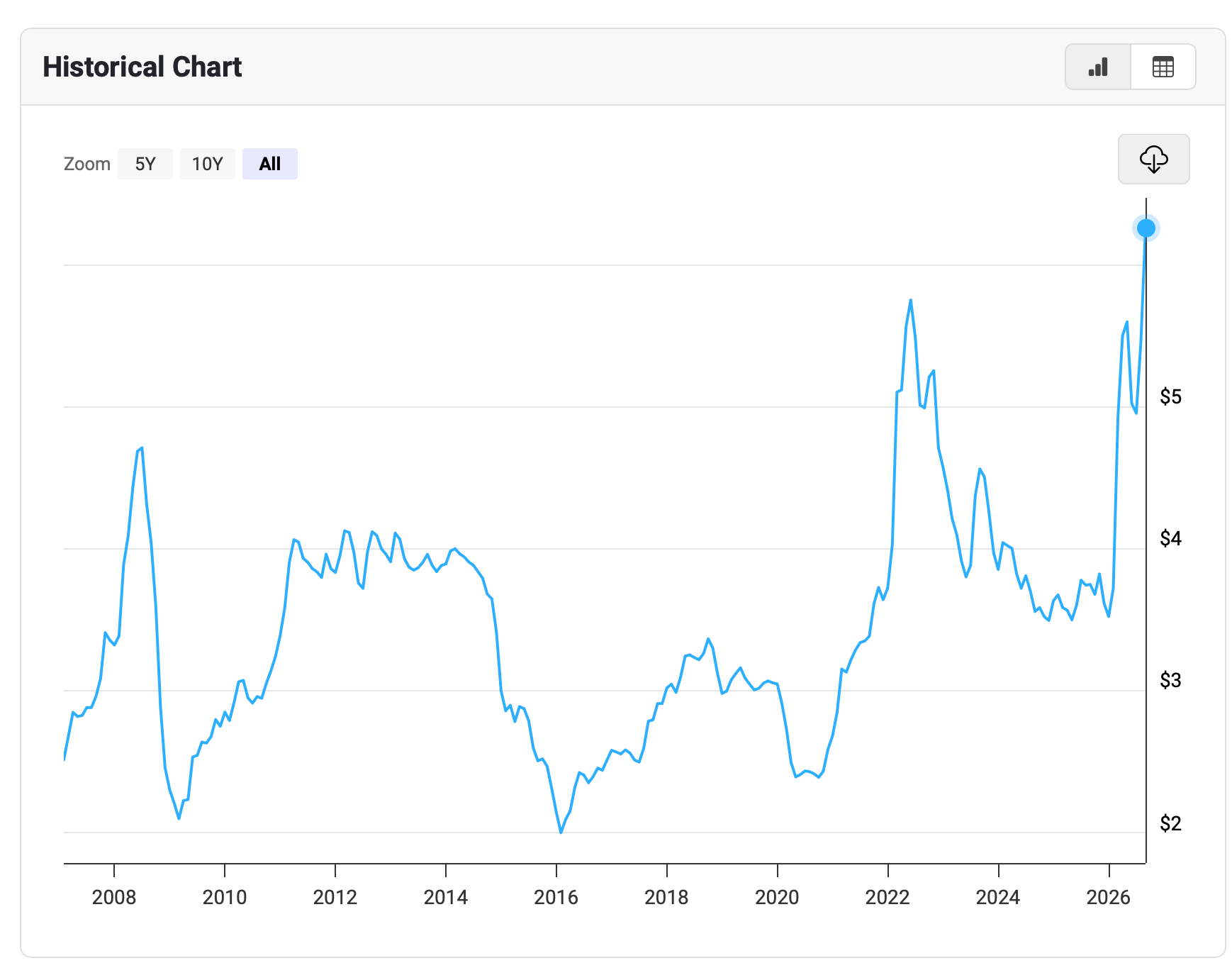
Source: Macrotrends.net
Voters want Congress to act as a check on Trump
Another new polling question we asked this month is whether voters want Congress to be a check on President Trump, or to ally with him to pass his agenda. 56% of respondents say it’s more important to them to elect a Congress that will act as a check and balance on Trump. In comparison, just 26% want a Congress that helps Trump pass his agenda, and 18% pick neither or aren’t sure.
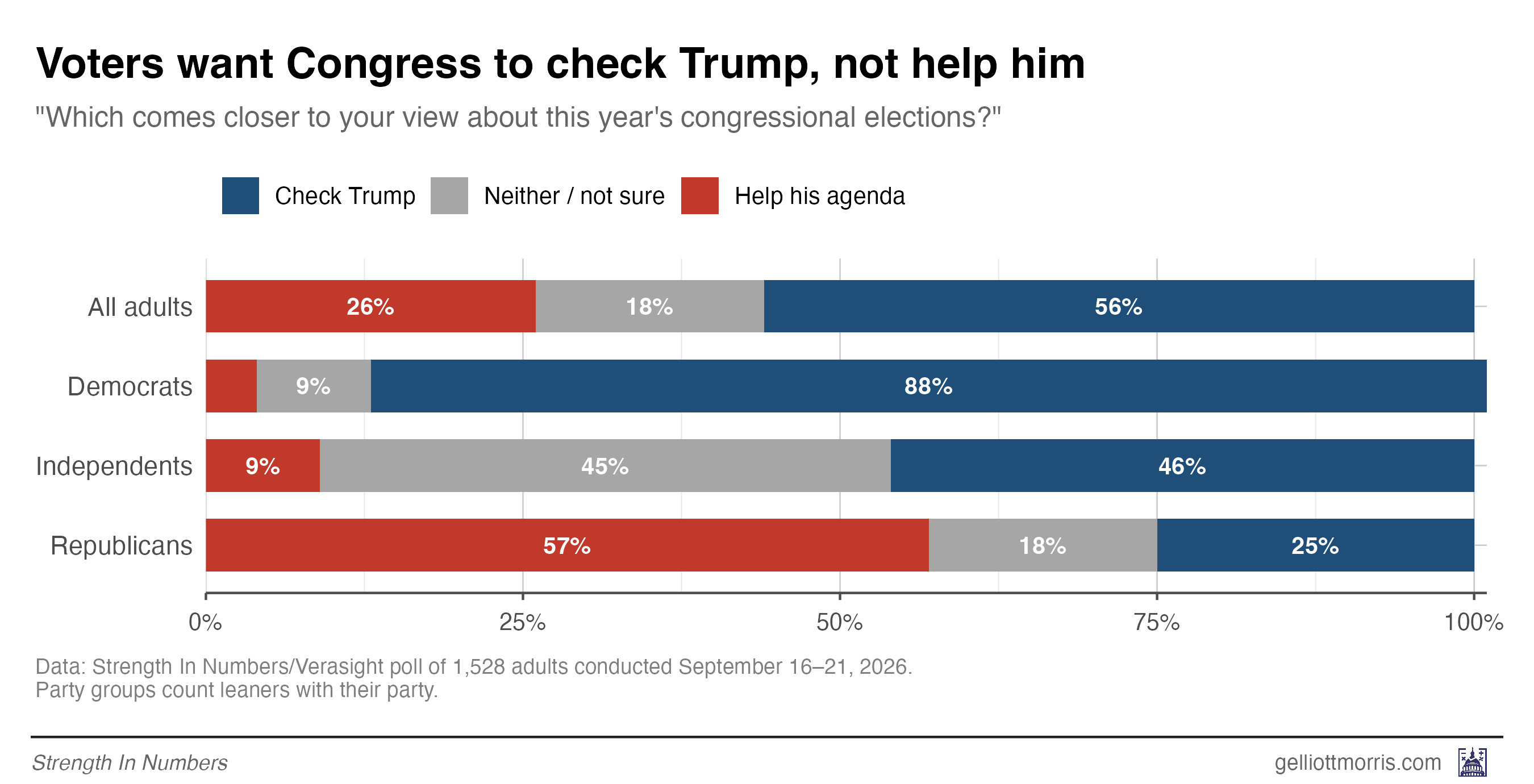
Even Trump’s own coalition is split on this. Republicans and Republican-leaning independents divide 57% for helping his agenda against 25% for checking him — a quarter of his own party wants Congress to hold him back. Independents lean toward a check, 46% to 9%, with 45% landing on neither. Democrats are nearly unanimous: 88% want Congress to be a check on the president, while 8% don’t know and 4% want it to help Trump.
Trump won in 2024 in part because voters wanted relief from high prices and a feeling that they were getting ahead. Our new poll suggests many are still waiting. And this is not just Democrats expressing their usual opposition to a Republican president: One in four of Trump’s own voters say their lives are worse off than four years ago.
That dissatisfaction does not automatically turn a Trump voter into a Democratic voter. But Democrats do not need everyone to embrace their party’s entire agenda to benefit from a backlash against the president. And these numbers present a more fundamental story about democratic satisfaction that has significant implications beyond partisan electoral outcomes.
A majority of Americans already say they want Congress to check Trump — today, not in January 2027, today. While, yes, that is a clear warning to Republicans about the electoral consequences they will face for standing by, it is also a descriptor of how democratic government ought to be working today.
In 2024, Republicans benefited from the desire to “throw the bums out” and shake things up. Now, they’re the ones who have to defend the status quo. For the vast majority, that is a losing battle.


There are so many things that need "fixing" in our government: Citizens United, stricter rules/laws vs. traditions and guidelines, term limits for the Supreme Court, ETHICS rules for Congress, SCOTUS and the president, etc.
One other BIG fix we need is better civics education. As a retired teacher in an excellent school district, I speculate that those "not sure" about Congress checking the president have never been taught about the built-in checks and balances that our founding fathers deliberately and conscientiously put into our Constitution in order to prevent the very tyranny we are enduring right now. They've never read or studied any of the Federalist Papers, which are commonly cited in major SCOTUS decisions.
Just learning and discussing the preamble is a great exercise in understanding OUR government, and how important it is to participate if we want to keep a functional democracy.
Those were excellent questions to ask, and I admire your consistency in looking at the questions that decide an election. I think you were spot on about why Trump won in 2024, and 2026 tracks to 180° pointing back at Trump and the GOP.