Here’s a fun fact: According to economist Nicholas Bloom and coauthors, for every dollar the U.S. Federal Government spends collecting data at the national Bureau of Labor Statistics, it returns $25 in additional national economic activity. Seems like a pretty good deal, right?
Well, that economic — as well as the intrinsic democratic (lowercase “d”) — value of our federal data system (think of agencies like the Census Bureau as well as the BLS) is now under threat. Proposed changes to the 2030 census, and the widespread defunding of the departments that generate federal data, could decrease the accuracy of many studies of the population, as well as political polls (something of great interest to this newsletter’s audience).
And here’s one matter of particular concern: A proposed change by the Trump administration to the 2030 Census could result in an undercount of the population in states with large clusters of non-citizens, including both legal immigrants and unauthorized immigrant residents (think Texas, Florida, and California). This change is likely unconstitutional, but that may not stop the change from being implemented.
On this week’s Strength In Numbers podcast, Elliott is joined by Chris Jackson, Senior Vice President at the polling and research firm SSRS, to talk through what the “federal data system” is, what these threats are, and what you can do about it.
After you listen to this podcast, please go to handsoffourcens.us to learn how to leave a public comment about the proposed changes
This video is free to watch, but it was not free to produce. If you value this podcast and want to help keep it going, please consider becoming a premium subscriber to Strength In Numbers. Paid subscriptions keep the show ad-free, fund the newsletter, and ensure we have the time it takes to do original data-driven analysis of politics and elections. Paying subscribers also gain the ability to send in questions during our livestreams, so you can directly shape our conversations on the podcast.
Time stamps:
00:00 Intro: the proposed 2030 Census rule and how to leave a comment
04:20 What federal data is and why it matters
19:20 Threats from staff cuts, shutdowns, and DOGE
43:26 Falling trust in the data and the political fight over who gets to be included as “people”
59:04 What you can do about this
Thanks again to Chris Jackson for spending the time to walk us through the federal data system.

As a reminder, paid subscribers to Strength In Numbers get to participate in our live Q&A on Substack Live each week.
You can also subscribe to us on your favorite podcast app to listen on your own time, or check out the Strength In Numbers channel on YouTube. And if you do listen via one of those apps, please drop us a five-star rating and review if you feel we’ve earned it — it really helps people discover the show!
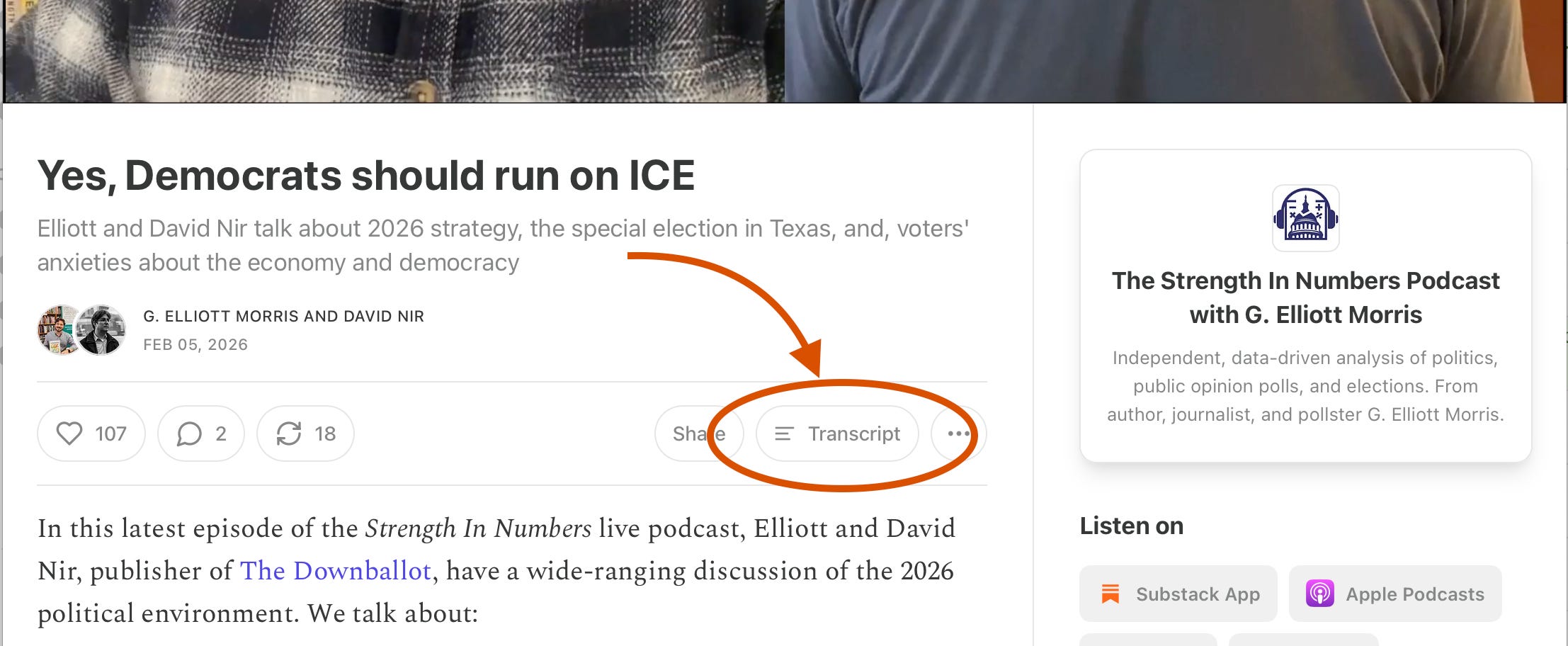
You can read the transcript of our conversation by clicking the headline of this article to take you to the web version of the podcast, then clicking the button just below the byline that looks either like a piece of paper or is labeled “Transcript,” like so: