


This is my weekly Sunday roundup of new political data published over the last seven days. It is free to read, but if you want to support independent data-driven political journalism, become a paying subscriber and get additional data products and premium analysis at least once weekly.
Dear readers,
Elliott here, and I bring good news in the form of two announcements. First, in honor of the election season getting underway, plus my official return from paternity leave, I’m reinstating my Sunday weekly roundup of political data links from here and across the web. As before, if you have something for me to share with readers here next week, feel free to put it in the comments or send it to me via email.
Second, I’m happy to report the return of the weekly live recording of the Strength In Numbers podcast this Thursday at 2:00 PM Eastern time. Join me and David Nir of The Downballot as we talk about data, politics, and elections and take questions live from subscribers. The best way to tune in is via the official Substack app. If you’re more of a traditional podcast person, you can also listen after the fact on your podcast player of choice.
Leading off: YouGov has replicated my estimates of “closet Republicans” in a new piece answering the question of why Democrats aren’t up +20 points in the midterms when Donald Trump’s approval is that low. Most of the answer is that Republicans who disapprove of Trump are still Republicans at heart. (YouGov also has one of the lowest margins for Democrats on the generic ballot.)
On deck this week: Tuesday’s Deep Dive is about how Trump’s and Republicans are losing support both from Republicans and independents, and how Democrats are increasingly united in opposition against him. I’ve also got another Data Lab post cooking on likely voters, and one about changes in how polls are being conducted for 2026.
If you’re not subscribed yet, enter your email here to get these in your inbox.
Diving right in…
1. YouGov: Why Republicans are running ahead of Trump’s approval
A few months ago, I wrote a piece responding to an article in The Argument, a pro-Liberalism Substack, that argued Democrats needed to move right on crime to increase their margin in the House 2026 generic ballot. I pointed out that most “holdouts” for the party — people who said they disapproved of Trump but would stay home or vote for Republicans Republican in November — were just Republicans who weren’t going to vote for Democrats regardless of their stance on crime.
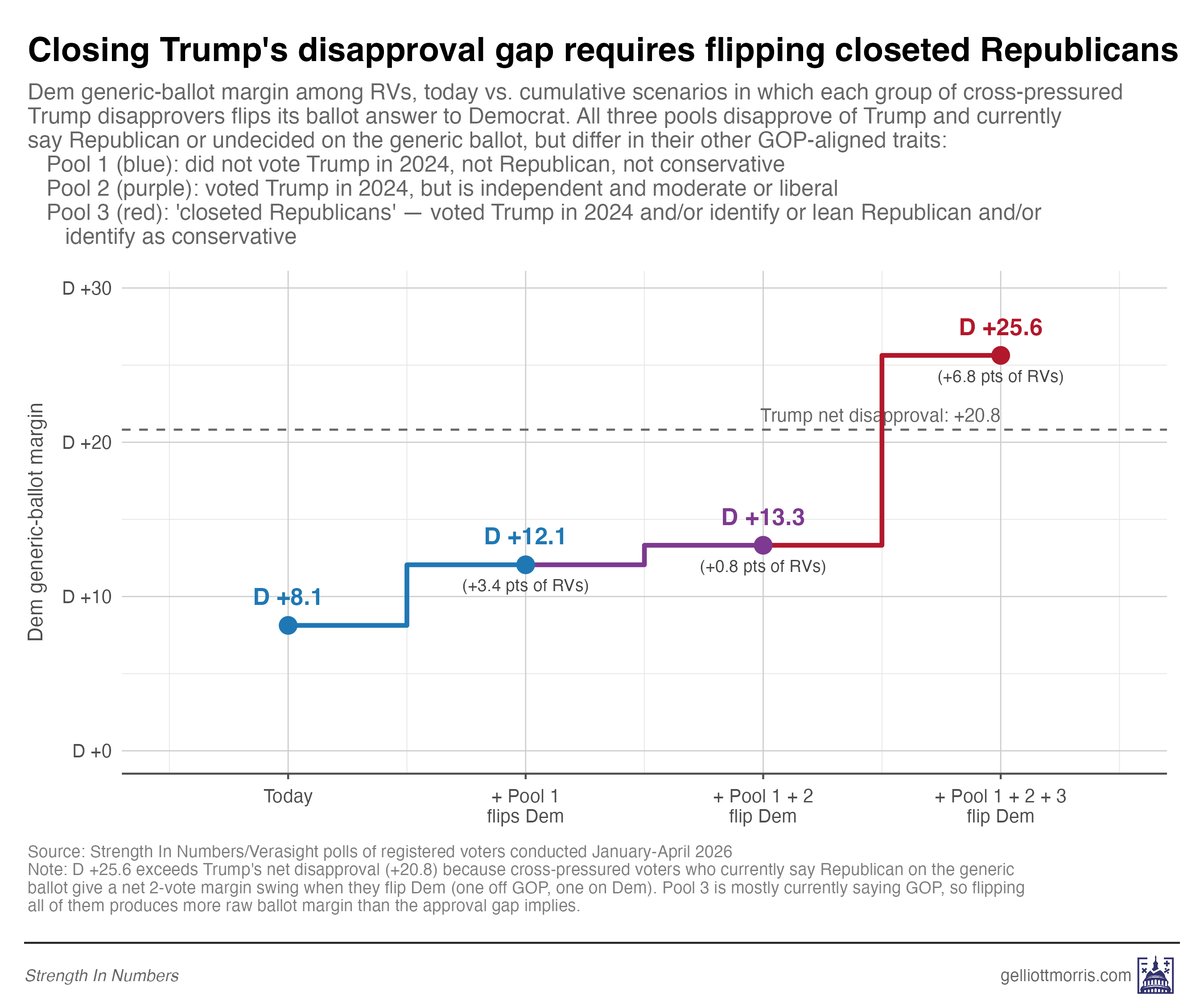
Two weeks ago I updated that first article with some more data. Of note: About 5% of current registered voters, according to our polling, are adults who are undecided on the generic ballot. Adding those to the current margin would put Democrats in a dominant position in the House and Senate, and don’t require the hard (impossible) work of convincing Republicans to trust Democrats on crime (it’s kinda in the name):
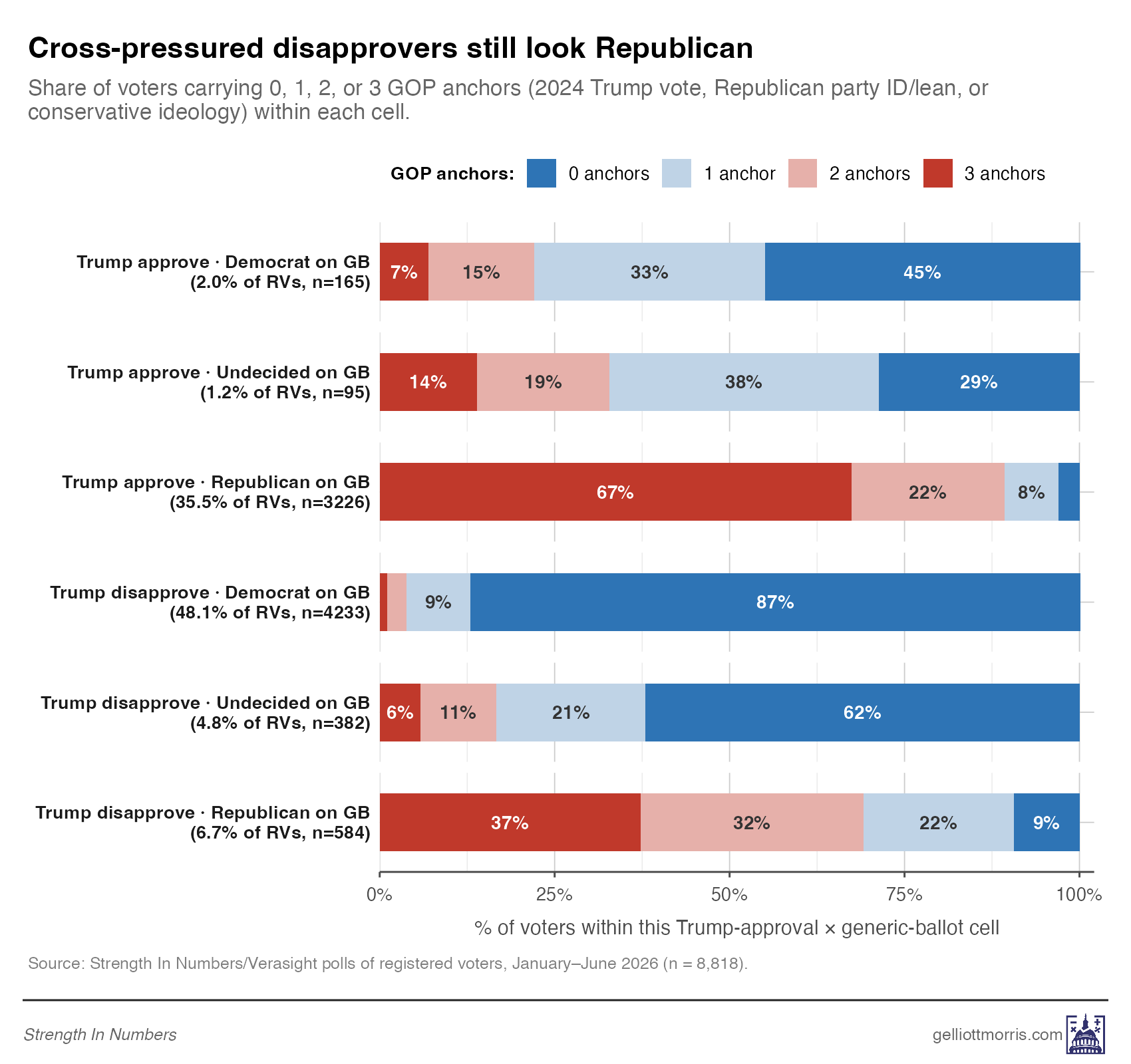
Well, YouGov has done a similar analysis to mine and arrived at largely the same conclusion: Around 40% of holdouts, and 4% of registered voters, are people who look like reliable Republicans. Some graphics from YouGov here:
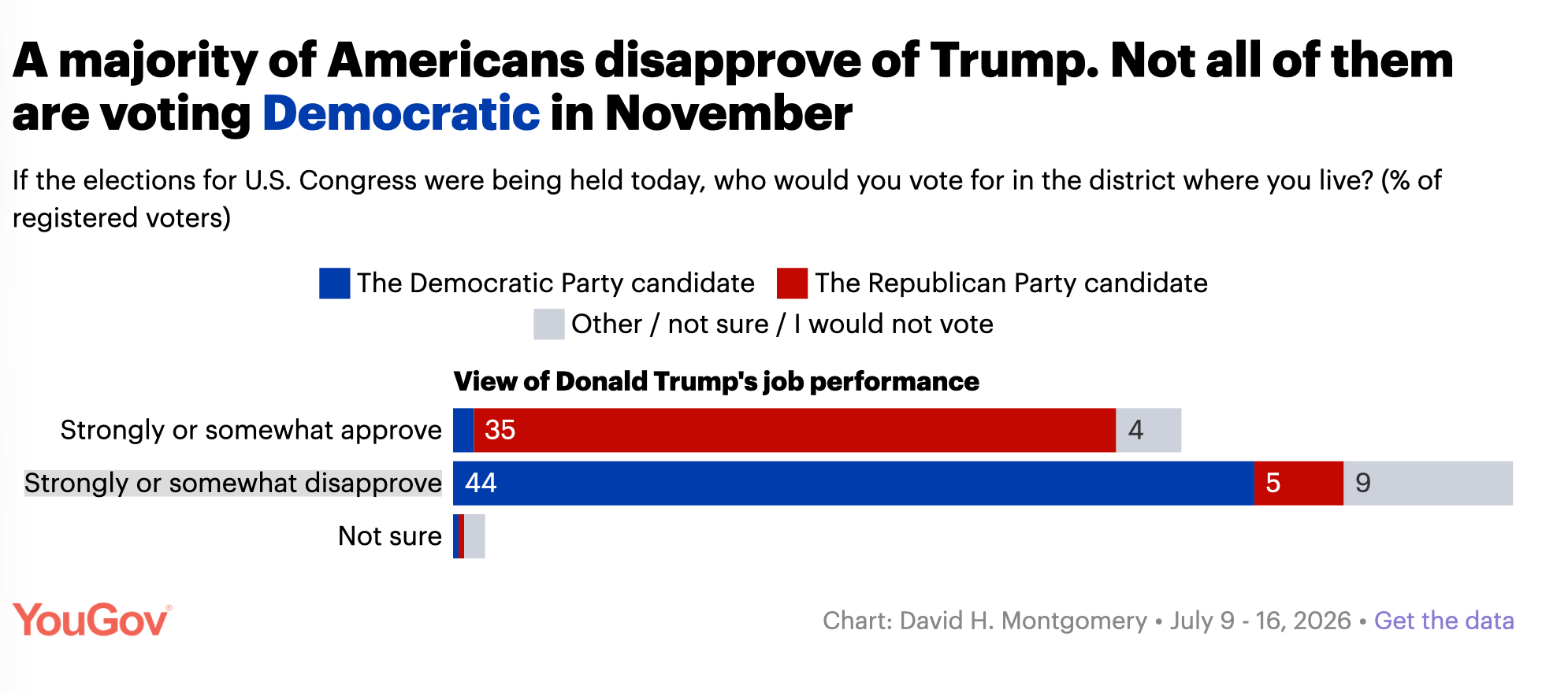
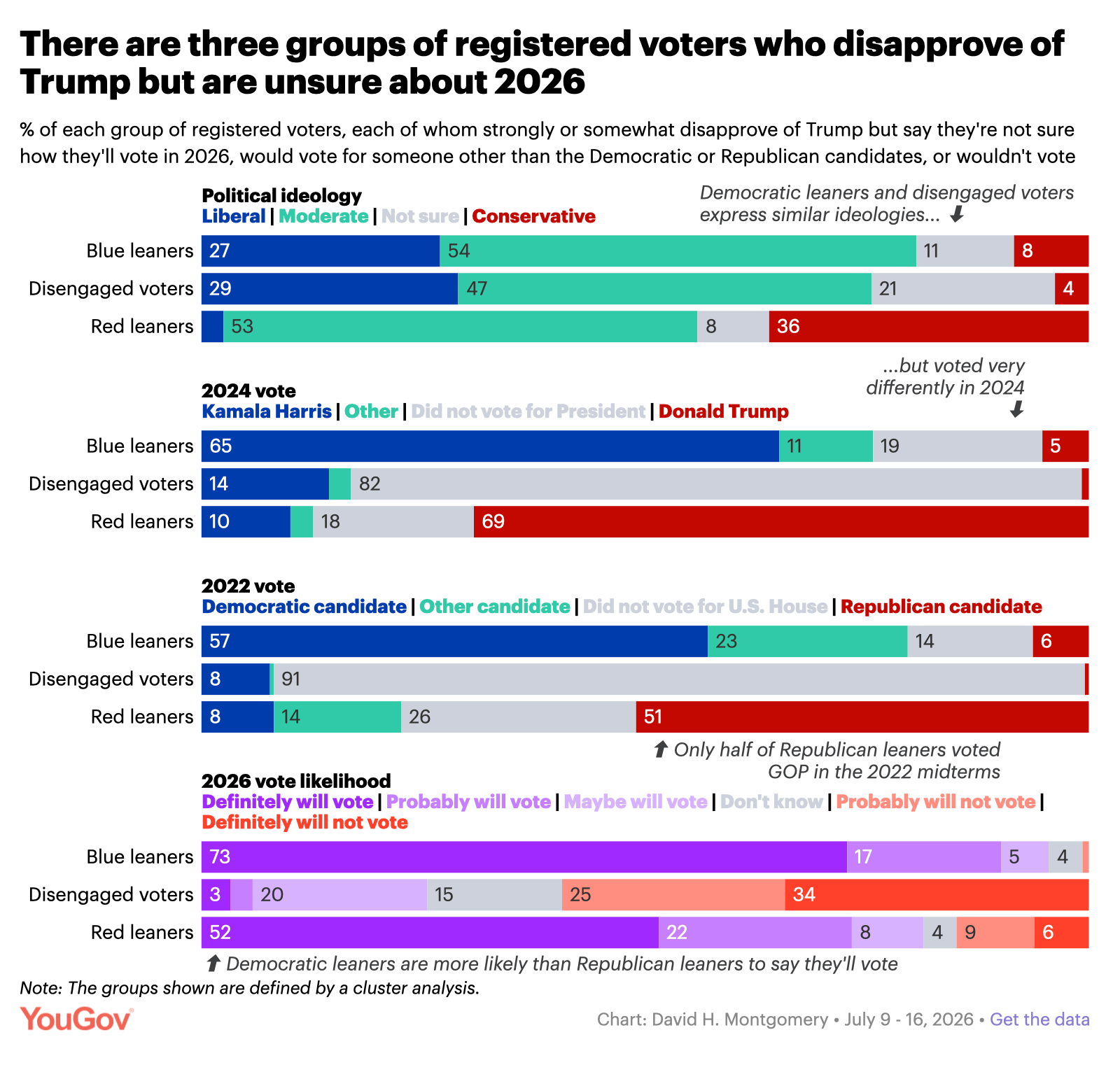
Quoting YouGov’s David Montgomery here:
So why are Democrats not doing better despite Trump’s low approval ratings? With regular polling of these questions and the cluster analysis, we can say that, about 40% of it is anti-Trump Republicans who haven’t said they will vote for Democrats. About 20% of it are disengaged voters who dislike Trump but rarely show up to vote. And the final 40% are otherwise Democratic-leaning voters who for whatever reason are not saying they’ll vote for Democrats for Congress.
In other words, the biggest reason Democrats are at +8 on the generic ballot instead of +20 is because low-turnout and Democratic-leaning groups haven’t decided who to vote for or if they’ll vote yet. There are surely some voters Democrats could win by moving right on the issues, but casting that as the central limiting factor for the party overstates the evidence in both Strength In Numbers’ and YouGov’s polling.
2. What Strength In Numbers published last week
On Tuesday, I released the latest results of our Strength In Numbers/Verasight polling collaboration. We asked the usual political tracking questions like presidential approval and the generic ballot, plus a handful of questions subscribers submitted on AI, Trump’s “SAVE America” Act, and Trump’s mental fitness for office:

I also posted the latest Deep Dive episode of my podcast. I talk to Ben Wikler, former chair of the Democratic Party of Wisconsin, about his new book THIS IS THE PLAN:

On Wednesday, I published a piece about how likely voters in our poll favor Democrats more in the race for the House. I’m going to write a follow-up about this article where I get wonky about how pollsters decide what a “likely voter” is and how this influences our poll results:

On Thursday, I published a special post to the new Data Lab section of this publication about how weighting to new estimates of party ID from the Pew Research Center would impact poll results:

And on Friday, the Chart of the Week was another finding from our July poll on what type of Americans say they couldn’t prove their citizenship in the way they would be required to under Trump’s proposed voter ID/election administration law:

If you’re a frequent reader of Strength In Numbers, I’m confident you will get a lot of value out of a paid subscription. You’ll get access to all of my Tuesday Deep Dives, monthly polling data, our private community of election nerds on Discord, and more.
3. Even more numbers!
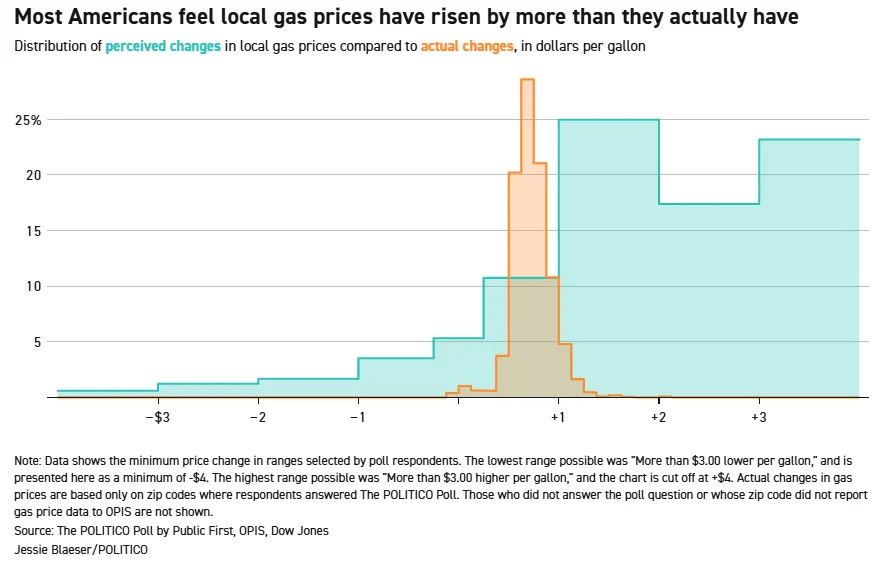
The viz in this Politico article about how people overestimate gas price inflation is very good:
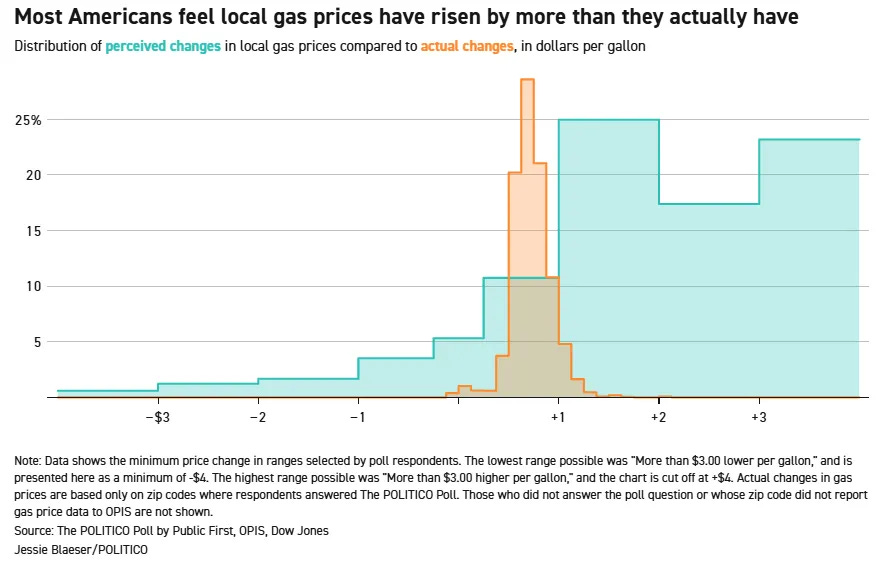
Politico Poll: “Republicans’ gas price problem is even worse than it seems”
The Fox News poll finds Republicans losing ground on key issues like immigration and the economy. That will not be news to anyone with a Strength In Numbers subscription; our polling has shown this for months.
And that’s it for this week! Thanks for reading. Strength In Numbers will be back in your inbox on Tuesday.
Got more for next week? Email your links or add to the comments below!
Welcome back, Mr. Morris!
I do hope that maybe low-turnout voters and indecisive Democrats will pay attention to the mass destruction of our democracy, which in turn translates to overt, smug corruption from the Trump family and cronies (because they've undermined the rule of law), which in turn translates to higher prices for the vast majority of Americans, fewer opportunities, increased likelihood of broligarchs in charge, and AI still looming over the fate of billions.
Accountability is important for our politicians, and also for voters.
We must participate in order to create better futures for all of us.
We do not need anti-trump Rs to vote D - if they merely stay home, there would be a D tsunami if D voters and leaners turn out.